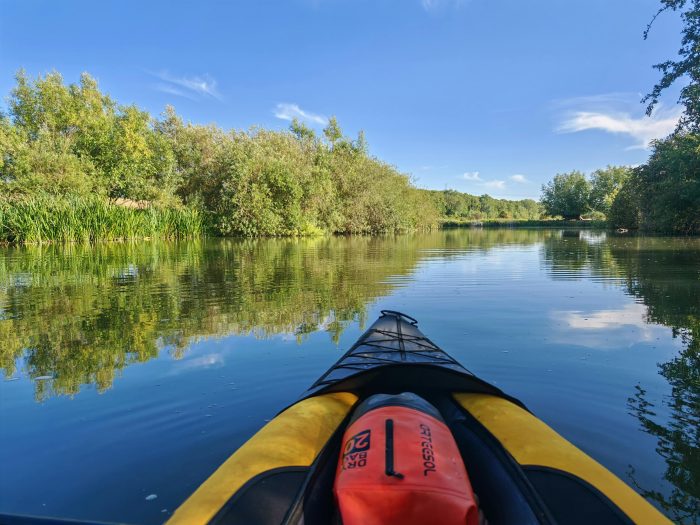
A GPS tracker for your kayak serves two purposes that every paddler can appreciate. The first is protecting a significant financial investment from theft. The second, and arguably more important, is personal safety: if something goes wrong on the water and you become separated from your kayak, a tracker helps rescuers find both you and your boat.
Kayak theft is more common than many paddlers realise. A kayak left unattended on a beach, at a launch ramp, or stored outside overnight is an attractive target. At the same time, solo paddlers on remote rivers and coastal water increasingly carry trackers as part of their safety setup, giving family and friends the ability to monitor their location and raise the alarm if something goes wrong.
This guide covers the best GPS trackers for kayaks, the important limitations of each technology, and how to use a tracker effectively for both theft prevention and personal safety.
Why Kayakers Use Trackers
Theft prevention
A kayak is a valuable item that is difficult to lock securely and easy to load onto a vehicle and drive away with. Unlike a bicycle which can be locked to a fixed object, a kayak is typically stored in a location where a determined thief can simply pick it up and leave. A hidden GPS tracker gives you the ability to track the kayak’s location after it has been taken and provide real-time location data to police.
Personal safety and float plans
Many serious paddlers use GPS trackers as part of their float plan — a pre-agreed plan that tells family or a ground crew where they are paddling, what route they are taking, and when they expect to return. A tracker that updates location regularly means that if a paddler does not return on time, family or emergency services can locate them quickly rather than searching a large area of water.
Read: Paddle Leashes for Kayaking
Types of Trackers: Bluetooth, Cellular, and Satellite
Understanding the three main tracker technologies helps choose the right one for your paddling environment.
Bluetooth trackers (e.g. AirTag, Samsung SmartTag)
Bluetooth trackers work by broadcasting a signal that is picked up by nearby devices in the manufacturer’s network. An Apple AirTag is detected by any iPhone in range and reports its location back to the owner through Apple’s Find My network. A Samsung SmartTag works the same way through Samsung’s SmartThings network.
The advantage is low cost and no subscription fee. The significant limitation for remote kayaking is that Bluetooth trackers only work when another network device is nearby. In a remote lake, river, or coastal area with few other people, there may be no devices in range to relay the location and the tracker becomes effectively useless.
Bluetooth trackers are most effective in urban and suburban environments where network device density is high. For city-based paddling and storage, they are practical and affordable. For remote paddling, they are insufficient as a sole tracking solution.
Cellular GPS trackers (e.g. LandAirSea 54)
Cellular GPS trackers use mobile phone networks to transmit location data. They provide accurate real-time location updates wherever mobile coverage exists. Most require a monthly subscription fee for the cellular data service.
The limitation is the same as a mobile phone — no coverage in remote areas outside mobile network range. For most Australian coastal and urban paddling where mobile coverage is available, cellular trackers provide the best balance of accuracy, update frequency, and cost.
Satellite GPS trackers (e.g. SPOT Trace)
Satellite trackers communicate via satellite rather than mobile networks and work anywhere on Earth regardless of mobile coverage. They are the only reliable option for remote paddling in areas with no mobile coverage including offshore, remote rivers, and wilderness areas.
The disadvantages are higher device cost and higher subscription fees. For serious paddlers venturing into remote environments, satellite trackers are worth the additional investment.
Best GPS Trackers for Kayaks
1. Apple AirTag — Best Budget Option for Urban Paddling
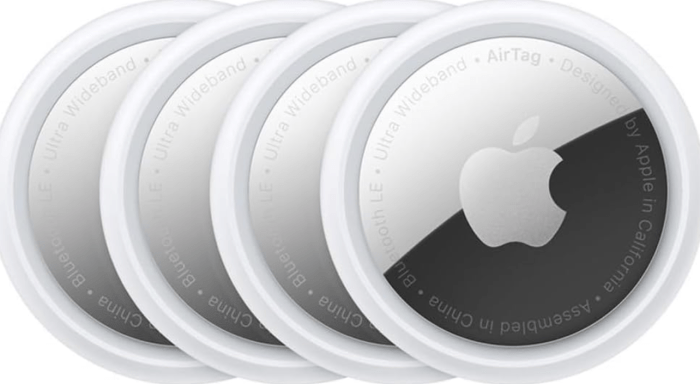
The Apple AirTag is the most popular kayak tracker among recreational paddlers. It is small, affordable at around USD$29 to USD$39 (AUD$45 to AUD$60), requires no subscription fee, and integrates seamlessly with the iPhone Find My app.
For kayakers who store their boats in suburban areas and paddle on populated lakes and waterways, the AirTag provides a practical entry-level tracking solution. The precision finding feature guides you to the exact location of the AirTag using ultra-wideband technology when you are nearby.
The critical limitation: An AirTag will send an alert to nearby iPhones notifying them that an unknown AirTag is travelling with them. This anti-stalking feature, while important for personal privacy, means a thief with an iPhone may be alerted to the presence of the tracker. This significantly reduces its effectiveness as a theft deterrent in some situations.
Best for: Urban and suburban storage, populated paddling locations, paddlers who already use Apple devices.
Not suitable for: Remote paddling locations, areas with low iPhone density.
2. Samsung SmartTag2 — Best Budget Option for Android Users
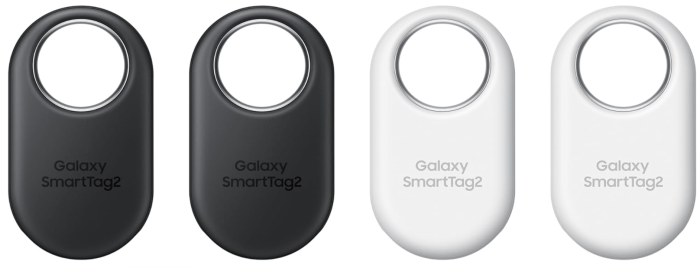
The Samsung SmartTag2 is the Android equivalent of the AirTag. It is waterproof, affordable at around USD$30 to USD$40 (AUD$45 to USD$60), requires no subscription fee, and works through Samsung’s SmartThings network.
The SmartTag2 has an IP67 waterproof rating which makes it more suitable for kayaking environments than the AirTag which has a lower water resistance rating and requires a separate waterproof case for reliable kayak use. The SmartTag2 also has a longer battery life than the AirTag at up to 6 months per battery.
Best for: Android and Samsung users, urban and suburban paddling, storage security.
Not suitable for: Remote paddling, areas with low Samsung device density.
3. LandAirSea 54 — Best Cellular GPS Tracker
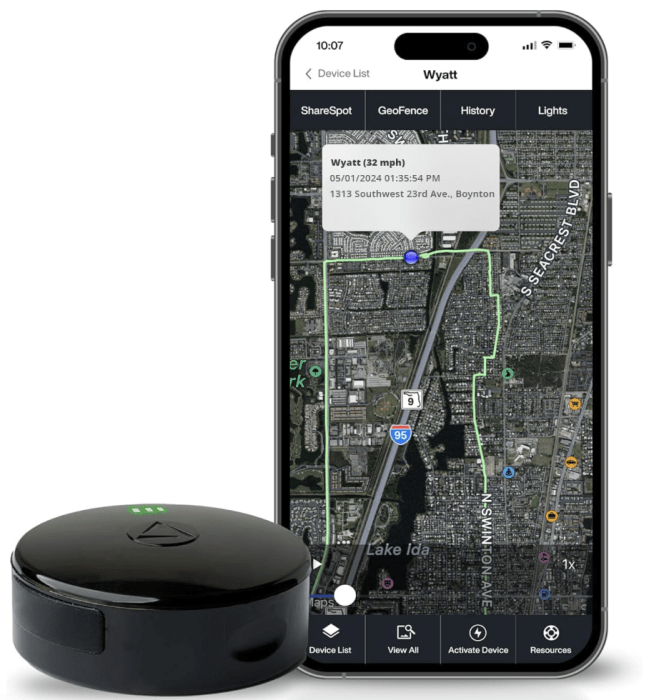
The LandAirSea 54 is one of the most popular cellular GPS trackers for asset protection including kayaks and other outdoor equipment. It features an IP67 waterproof rating, a built-in magnet for easy hidden attachment, real-time location updates as frequently as every 3 seconds on the premium plan, and a geofence alert feature that notifies you when the tracker leaves a defined area.
Subscription plans start at around USD$9.95 per month for basic tracking with 1 minute updates up to USD$24.98 per month for 3 second updates and extended battery life. The device itself costs around USD$30 to USD$50 (AUD$45 to AUD$75).
Unlike Bluetooth trackers, the LandAirSea 54 does not rely on other users’ devices to relay its location — it transmits directly via the cellular network wherever coverage exists.
Best for: Paddlers who want real-time tracking with frequent updates, geofence alerts, and reliable coverage in populated areas.
Not suitable for: Remote paddling outside mobile coverage areas.
4. Spot Gen 4 Satellite GPS Messenger — Best for Remote and Offshore Paddling
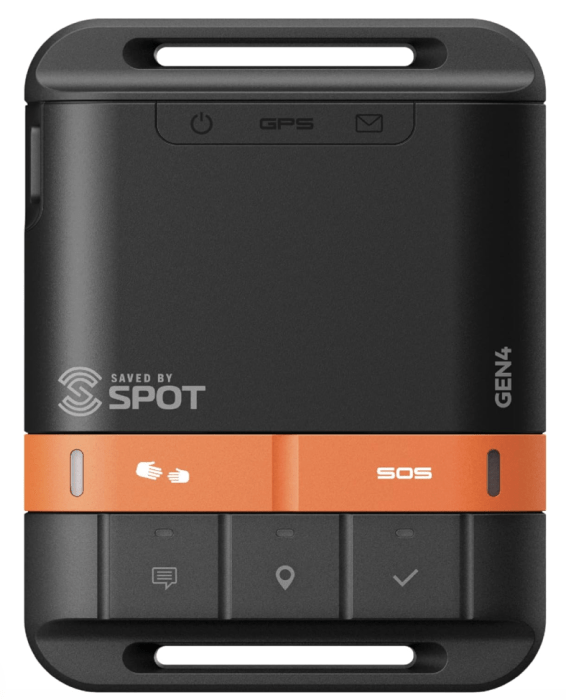
The Spot Gen 4 Satellite GPS Messenger is a satellite GPS tracker that works anywhere on Earth regardless of mobile coverage. It updates location every 5 minutes and sends the data via the Globalstar satellite network to a web-based tracking portal that can be shared with family, a ground crew, or emergency services.
The Spot Gen 4 Satellite GPS Messenger is the tracker of choice for serious paddlers undertaking remote river trips, offshore paddling, and expeditions where mobile coverage cannot be guaranteed. It provides genuine peace of mind for both the paddler and their support network.
The device costs around USD$190 to USD$210 (AUD$270 to AUD$290) and requires an annual subscription of around USD$150 to USD$250 depending on the plan. The higher cost reflects the genuine advantage of satellite coverage in remote environments.
Best for: Remote river paddling, offshore and coastal expeditions, wilderness paddling where mobile coverage is unavailable, float plan tracking.
Not suitable for: Casual recreational paddlers who paddle in areas with reliable mobile coverage — the cost is higher than necessary for this use case.
5. CPVAN Motion Sensor Alarm (non-GPS) — Best Budget Deterrent
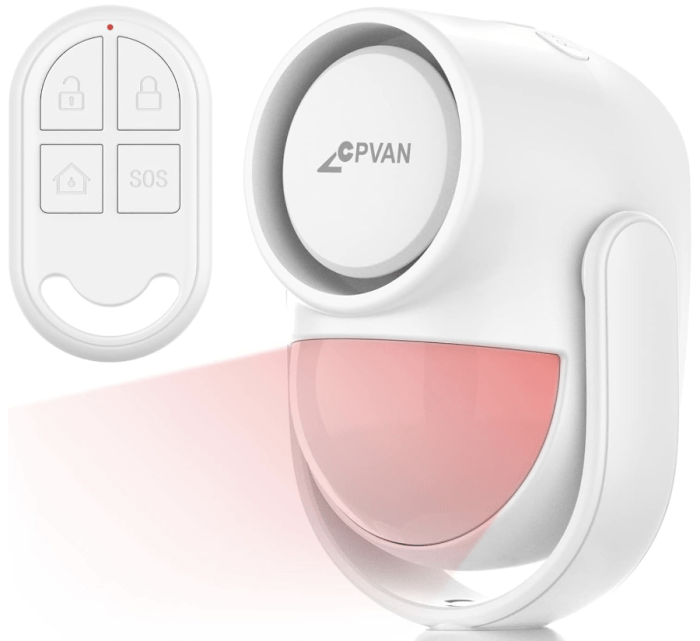
The CPVAN Motion Sensor Alarm is not a GPS tracker but earns its place on this list as the most affordable theft deterrent available for kayak storage. A motion-activated alarm attached to a stored kayak or its storage rack emits a 125 decibel siren when the kayak is moved, alerting the owner and deterring opportunistic thieves before they can get away.
The CPVAN is wireless, battery operated, and requires no installation beyond positioning it near the kayak. The remote control allows arming and disarming from a distance and the adjustable volume means it can be set to alert without disturbing neighbours unnecessarily. It is suitable for shed and garage storage as well as outdoor kayak racks.
At around USD$35 to USD$40 (AUD$50 to AUD$60) with no subscription fee it is the lowest cost option on this list. It does not provide location tracking after the fact but the loud siren is often sufficient to deter the opportunistic theft that accounts for most kayak stealing. Used alongside one of the GPS trackers above it provides an effective two-layer security approach — the alarm deters the theft from happening, the tracker recovers the kayak if it does.
The AirTag Limitation Explained
The Apple AirTag includes an anti-stalking feature that sends an alert to nearby iPhones when an unknown AirTag has been travelling with them for a period of time. This feature was designed to prevent AirTags being used to track people without their knowledge.
The unintended consequence for kayak theft prevention is that a thief who carries an iPhone may receive an alert telling them an AirTag is nearby. This could prompt them to search for and remove the tracker before police can act on the location data.
The practical impact of this limitation depends on the local environment. In areas where iPhone ownership is high, the risk of the thief being alerted is significant. In areas where Android devices are more prevalent, the risk is lower as the AirTag does not alert Android devices in the same way.
For paddlers specifically concerned about this limitation, the Samsung SmartTag2 and LandAirSea 54 tags are more appropriate alternatives.
Where to Hide a Tracker on a Kayak
The effectiveness of any tracker depends partly on how well it is concealed. A visible tracker is easily found and removed. A well-hidden tracker survives the theft and continues transmitting location data.
Effective hiding spots:
- Inside a sealed hatch beneath gear and equipment
- Inside the hull through a scupper hole or inspection port
- Under the seat in a waterproof pouch
- Inside a foam block glued to the inside of the hull
- In the bow or stern bulkhead area
General principles:
Choose a location that is not immediately obvious, that provides some physical protection for the tracker, and that does not interfere with the waterproofing of the hull. Enclose the tracker in a small waterproof pouch or waterproof case for additional protection even if the tracker itself has a waterproof rating.
For Bluetooth trackers like the AirTag, choose a location that is as central to the kayak as possible to maximise the signal range in all directions.
Using a Tracker for Personal Safety
A GPS tracker on a kayak is most valuable for personal safety when it is combined with a float plan shared with a trusted person on shore.
How to set up a float plan with a tracker:
- Before every paddle, tell a family member or friend your planned launch point, route, and expected return time
- Share your tracker’s live location link with them so they can monitor your position in real time
- Agree on a protocol — if you have not returned or checked in by a specific time they will call emergency services
- Carry a charged mobile phone in a waterproof case as a backup communication device
The SPOT Trace and LandAirSea 54 both offer shareable tracking links that allow a nominated person to monitor your location from a web browser without needing to install any app.
Read: Best Waterproof Phone Cases for Kayaking
Other Anti-Theft Measures
A GPS tracker is most effective as part of a broader approach to kayak security rather than as a sole measure.
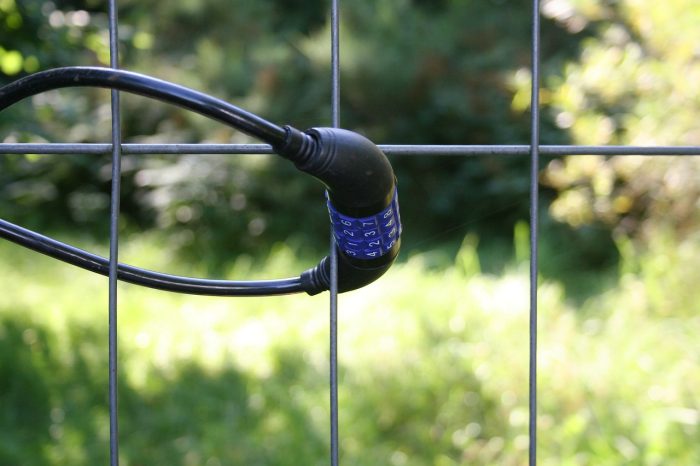
Locks and cables– A heavy-duty cable lock threaded through the cockpit and around a fixed object deters opportunistic theft significantly. While a determined thief can defeat a cable lock with bolt cutters, most kayak theft is opportunistic rather than planned and a visible lock is often sufficient to deter casual theft.
Make your kayak identifiable – Photograph your kayak from multiple angles and record the serial number. Some manufacturers include a hull identification number that can be registered with police. A uniquely identifiable kayak is easier to recover and harder to resell.
Store securely – The most effective anti-theft measure is secure storage. A kayak stored in a locked garage or shed is significantly less likely to be stolen than one stored outside. If outdoor storage is unavoidable, store the kayak out of sight from the street and use a cable lock as a minimum.
Insurance – Home and contents insurance policies often cover kayaks stored at home. Specialist marine insurance covers kayaks stored and used on the water. At around USD$15-20 (AUD$20- $30 per month), insurance provides financial protection if the kayak is stolen regardless of whether a tracker helps recover it.
Read: How to Lock a Kayak
Read: Best Kayak Locks
What To Do If Your Kayak Is Stolen
If your kayak is stolen and you have a GPS tracker installed:
- Do not confront the thief yourself — contact police immediately
- File a police report — provide the serial number, photos, and hull identification number
- Monitor the tracker location — use the Find My app or tracking dashboard to monitor real-time movement
- Provide updates to police — relay exact coordinates, timestamps, and address details to the investigating officers
- Take screenshots of the tracking map as evidence
- Contact your insurer if the kayak is not recovered
Frequently Asked Questions (FAQs)
Do GPS trackers actually help recover stolen kayaks?
Yes, in many cases. A real-time GPS tracker that continues transmitting location after theft gives police actionable information to recover the kayak. The key is providing police with live location data quickly rather than after the thief has had time to move the kayak to a concealed location or disable the tracker.
What is the best GPS tracker for a kayak?
For most recreational paddlers who paddle in areas with mobile coverage, the Apple AirTag or Samsung SmartTag2 provide the best value as a starting point. For paddlers who want real-time tracking with geofence alerts, the LandAirSea 54 is a stronger option. For remote and offshore paddlers, the SPOT Trace is the only reliable choice.
Does the Apple AirTag work for kayak theft prevention?
The AirTag works well for kayak theft prevention in populated areas with high iPhone density. The key limitation is that it may alert a thief with an iPhone to the presence of the tracker. For paddlers concerned about this, the Samsung SmartTag2 or LandAirSea 54 are better alternatives.
Where should I hide a GPS tracker on my kayak?
Inside a sealed hatch, under the seat in a waterproof pouch, or inside the hull through an inspection port are the most effective hiding locations. Choose a position that is not immediately obvious, provides physical protection for the tracker, and does not interfere with the kayak’s waterproofing.
Can I use a kayak GPS tracker for personal safety?
Yes. Many paddlers use GPS trackers primarily for personal safety rather than theft prevention. A tracker combined with a float plan shared with a trusted person on shore provides a reliable safety net for solo paddlers and those paddling in remote locations.
Do I need a subscription for a kayak GPS tracker?
It depends on the tracker type. Bluetooth trackers like the AirTag and Samsung SmartTag2 require no subscription. Cellular trackers like the LandAirSea 54 require a monthly subscription for the cellular data service. Satellite trackers like the SPOT Trace require an annual subscription for the satellite network.
Final Thoughts
For most recreational paddlers, an Apple AirTag or Samsung SmartTag2 hidden inside a hatch provides a practical, affordable starting point for both theft prevention and basic location tracking. For paddlers who want real-time updates and geofence alerts, the LandAirSea 54 is worth the monthly subscription. For serious paddlers venturing into remote environments, the SPOT Trace is the only reliable option.
Whatever tracker you choose, combine it with a float plan shared with a trusted person on shore, a cable lock for storage security, and comprehensive insurance for complete peace of mind.
For more on kayaking safety and gear, read our guides on best waterproof phone cases for kayaking and is kayaking dangerous.