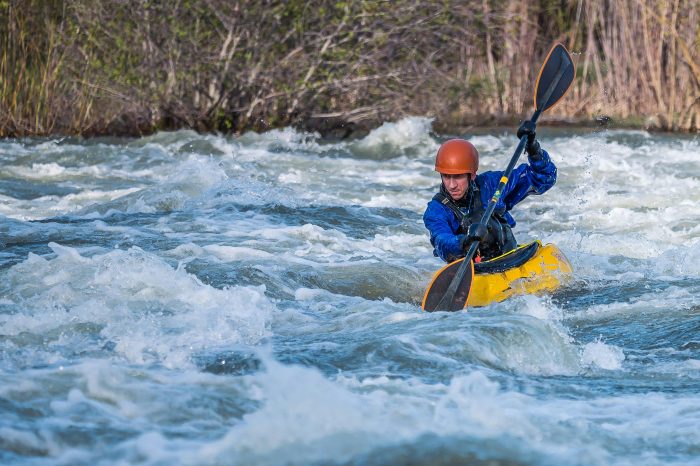
Kayaking with Parkinson’s disease is achievable for many people, particularly in the earlier and middle stages of the condition, and can be a genuinely valuable form of physical activity. Regular exercise is one of the most consistently supported interventions for Parkinson’s disease, with evidence suggesting it may help maintain motor function, balance, and quality of life over time.
The self-paced, rhythmic nature of paddling, combined with the calming environment of being on the water, makes kayaking a genuinely accessible option for many people managing Parkinson’s. At the same time, the specific motor, balance, and cognitive considerations of the condition require thoughtful planning and adaptation.
This guide covers the key considerations for kayaking with Parkinson’s disease, including tremor, balance, freezing episodes, fatigue, and medication timing, alongside practical equipment choices and safety planning.
Medical disclaimer: This article is intended as practical paddling advice. It is not a substitute for medical advice. Always consult your neurologist or treating physician before kayaking with Parkinson’s disease, particularly regarding medication timing, activity restrictions, and any specific safety considerations relevant to your stage of the condition. Follow their specific guidance on physical activity.
Why Kayaking Can Suit People With Parkinson’s Disease
Rhythmic, repetitive movement
The forward paddle stroke is a smooth, repetitive bilateral movement that engages both sides of the body in a coordinated pattern. Rhythmic, bilateral movement is specifically associated with motor benefits in Parkinson’s disease research, and many people with Parkinson’s find rhythmic activities more accessible than unpredictable, reactive movement.
Low-impact and seated
The seated paddling position removes the balance demands of standing and eliminates fall risk from the lower limbs during the activity itself, which is significant for people managing balance difficulties and increased fall risk associated with Parkinson’s disease.
Self-paced and adjustable intensity
Kayaking intensity is entirely self-directed, allowing a very gentle paddle on lower energy days and a more sustained effort when motor function and energy allow. This flexibility suits the day-to-day variability in symptoms that many people with Parkinson’s experience.
Outdoor activity and psychological benefits
Living with a progressive neurological condition carries a significant psychological load. Time spent outdoors and on the water is consistently associated with reduced stress and improved mood, which is a genuinely valuable complement to medical management.
Tremor and Kayaking
Tremor is one of the most common symptoms of Parkinson’s disease, though it varies significantly between individuals — some people have prominent rest tremor, others have little or none.
Intentional movement often reduces rest tremor
The tremor associated with Parkinson’s disease is typically a resting tremor, meaning it is most prominent when the limb is at rest and often reduces during intentional movement. For many paddlers with Parkinson’s, the act of gripping and using the paddle actively reduces the tremor that might be present at rest, making paddling more comfortable than it might initially appear.
Paddle grip adaptations
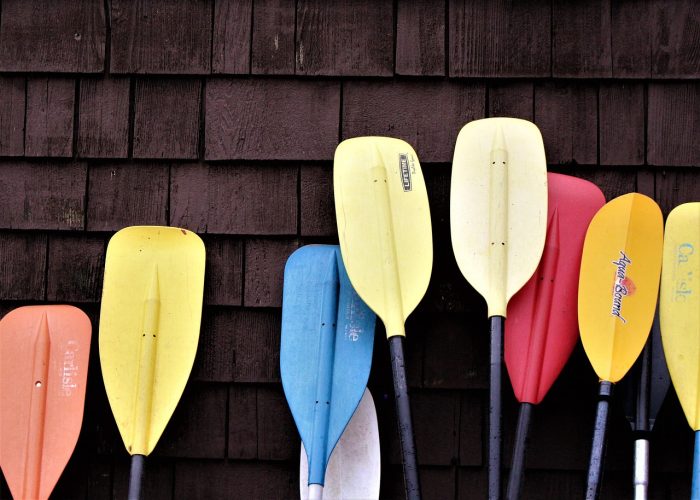
Standard paddle grips may be difficult to manage for people with significant hand tremor. Paddles with larger diameter grips or foam grip wrapping provide a more secure hold with less precise fine motor control required. Discuss specific paddle adaptations with an occupational therapist familiar with Parkinson’s disease if grip is a significant challenge.
Paddle weight matters
A lighter paddle reduces the overall physical demand of paddling and the muscular effort required to maintain grip and control, which is worth considering when choosing or upgrading equipment.
Balance Considerations
Balance impairment is a significant feature of Parkinson’s disease and one of the most important considerations for kayaking safely.
Choose the most stable kayak available
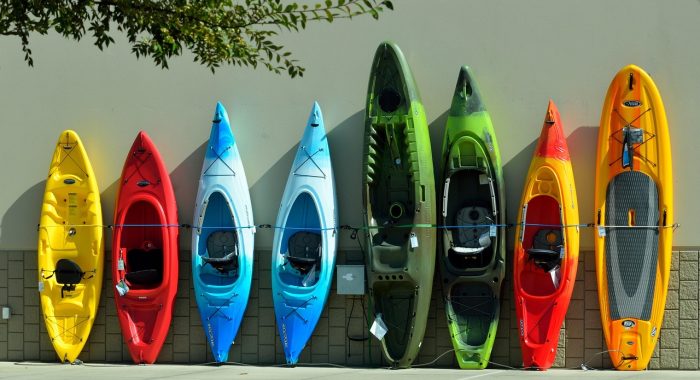
A wide, stable sit-on-top kayak with a flat hull bottom provides the maximum possible platform stability on the water, reducing the active balance correction required during paddling. This is the single most important equipment choice for a paddler with Parkinson’s disease.
Avoid kayaks that require active balance maintenance
Narrow, performance-oriented kayaks and sit-inside kayaks with a pronounced keel require considerably more active balance correction than wide recreational sit-on-tops. These are not appropriate choices for someone managing significant balance impairment.
Paddle on calm, flat water
Wind, chop, and boat wakes all create destabilising forces that require reactive balance responses. Choosing calm, sheltered water on still days removes these variables and allows paddling to remain within a manageable balance demand.
Consider an outrigger stabiliser
Outrigger floats that attach to the sides of a kayak provide significant additional stability and are a genuine option for paddlers whose balance impairment makes a standard kayak feel insufficiently stable, even a wide sit-on-top.
Freezing Episodes
Freezing of gait is a common feature of Parkinson’s disease where movement suddenly stops mid-action. While freezing is most commonly associated with walking, similar phenomena can affect other movements including reaching and transitioning between positions.
Plan entry and exit carefully
Entry and exit from a kayak involves transitions between sitting and standing, shifting weight, and stepping, all of which may be affected by freezing. Allow generous time, use a stable, gradual entry point such as a shallow sandy beach, and always have a companion present to assist if a freezing episode occurs during the transition.
Rest periods on the water
If a freezing episode occurs while paddling, the appropriate response is to rest calmly with the paddle across the cockpit and wait for the episode to pass rather than attempting to force movement. On calm water in a stable kayak, a brief freezing episode is manageable without safety risk.
Discuss freezing management with your neurologist
If freezing episodes are a significant feature of your Parkinson’s, discuss the specific implications for kayaking with your neurologist before starting. They may have specific advice on activity timing relative to medication to minimise freezing risk during paddling.
Medication Timing
Parkinson’s disease medications, particularly levodopa-based medications, have a significant effect on motor function and symptom management. Planning paddling sessions around medication timing is one of the most practical and impactful strategies available.
Paddle during “on” periods
Most people taking Parkinson’s medications experience periods of better motor control, known as “on” periods, when medication is working effectively, and periods of reduced control, known as “off” periods, as medication wears off. Where possible, plan paddling sessions to coincide with “on” periods when motor function, balance, and tremor control are at their best.
Discuss activity timing with your neurologist
Your neurologist is the best source of specific guidance on when your medication is most effective and how to time physical activity accordingly. Some people find that gentle exercise during an “on” period extends the duration and quality of that period, though this varies individually.
Carry medication on the water
If a paddling session extends into a time when a medication dose is due, carry medication in a waterproof container and plan rest breaks to take it on schedule. Missing a dose on the water can lead to a significant increase in symptoms that would be difficult to manage mid-session.
Fatigue Management
Fatigue is a very common and often underestimated feature of Parkinson’s disease, separate from the physical exertion of paddling itself.
Start with short sessions
Begin with short sessions of 15 to 20 minutes on calm water close to shore, and build up gradually based on how the body responds rather than a fixed schedule. The additional cognitive and motor demands of kayaking with Parkinson’s mean that sessions may be more fatiguing than the same duration of activity would be for someone without the condition.
Plan for rest before fatigue becomes significant
Rest on the water before fatigue becomes significant rather than waiting until it does. Floating calmly allows recovery without needing to return to shore immediately, and returning with energy remaining is always preferable to struggling back exhausted.
Allow recovery time after sessions
Plan rest time after a paddling session rather than scheduling other demanding activities immediately afterward, allowing the body adequate recovery from the combined physical and neurological demands of the session.
Cognitive Considerations
Some people with Parkinson’s disease experience cognitive changes including slowed processing speed, difficulty with dual-tasking, and reduced attention. These are relevant to kayaking since paddling involves simultaneous attention to technique, navigation, balance, and the environment.
Keep the paddling environment simple
Choosing familiar, simple routes on calm water with minimal navigation demands reduces the cognitive load of a session, allowing more attention to be directed toward paddling technique and enjoyment rather than navigation.
Avoid paddling in complex or busy environments
Boat traffic, complex currents, and unfamiliar environments all increase cognitive demand and reaction time requirements. These are better avoided, particularly in the early stages of developing a paddling routine.
Paddle with a familiar companion
A familiar companion who understands the individual’s specific Parkinson’s presentation reduces the social cognitive demand of the session and provides both safety support and the confidence that comes from paddling with someone who knows what to do if something unexpected occurs.
Choosing the Right Kayak and Equipment
Wide, stable sit-on-top kayak
As discussed above, a wide, stable sit-on-top kayak is the most appropriate choice for someone managing Parkinson’s disease. The open deck, wide hull, and flat bottom all contribute to a more stable, accessible platform.
Lightweight paddle with a larger grip
A lightweight paddle reduces overall physical demand, and a larger diameter grip or foam grip wrapping provides a more secure hold for people managing hand tremor.
Comfortable, supportive seat
A well-padded seat with good back support reduces overall fatigue and allows more energy to be directed toward paddling rather than managing postural discomfort.
Read: Best Kayak Seats
Kayak cart
A kayak cart significantly reduces the physical demand of transporting the kayak to and from the water, which is particularly valuable for someone managing Parkinson’s fatigue and balance impairment.
Read: Best Kayak Carts and Trolleys
Safety Considerations
Always paddle with a companion
Paddling alone with Parkinson’s disease is not recommended. A companion can assist with entry and exit, recognise if symptoms worsen unexpectedly, and call for help if needed.
Wear a well-fitted PFD at all times
A properly fitted PFD is essential for any paddler, and particularly important for someone managing balance impairment and increased fall risk. Ensure the PFD fits correctly and is fastened before launching.
Carry a means of communication
Carry a fully charged mobile phone in a waterproof case on every paddle.
Wear a medical ID
Wear a waterproof medical ID listing the Parkinson’s diagnosis and current medications. In an emergency where communication is difficult, this information is important for first responders.
Choose calm, sheltered water close to shore
Paddle on calm, sheltered water close to shore, particularly when starting out, reducing both the physical and cognitive demands of the session and the distance to safety if needed.
Have a clear plan for worsening symptoms
Agree in advance with your companion on what to do if symptoms worsen unexpectedly on the water, including when to return to shore, when to call for help, and where the nearest access point is.
Resources
Australia:
- Parkinson’s Australia — parkinsons.org.au — national resources and support for people with Parkinson’s and their families
- Fight Parkinson’s — fightparkinsons.org.au — Victorian-based organisation with exercise and activity resources specifically for Parkinson’s
United States:
- Parkinson’s Foundation — parkinson.org — comprehensive resources on exercise and living well with Parkinson’s
- American Parkinson Disease Association — apdaparkinson.org — patient resources and activity guidance
United Kingdom:
- Parkinson’s UK — parkinsons.org.uk — resources on exercise and physical activity for people with Parkinson’s
Frequently Asked Questions (FAQs)
Can you kayak with Parkinson’s disease?
Many people with Parkinson’s disease can kayak safely, particularly in the earlier and middle stages of the condition, with appropriate equipment, medication timing, and safety planning. Always consult your neurologist before starting, and paddle with a companion at all times.
Does tremor make kayaking impossible?
Not necessarily. Parkinson’s tremor is typically a resting tremor that often reduces during intentional movement like paddling. Many people find that the act of gripping and using the paddle actively reduces the tremor present at rest, making paddling more comfortable than expected.
When is the best time to kayak with Parkinson’s?
During medication “on” periods, when motor function, balance, and tremor control are at their best. Discuss specific medication timing and activity scheduling with your neurologist.
What type of kayak is safest for someone with Parkinson’s?
A wide, stable sit-on-top kayak with a flat hull bottom provides the most stable platform and requires the least active balance correction. Narrow or performance-oriented kayaks are not appropriate for someone managing significant balance impairment.
How do I manage a freezing episode on the water?
Rest calmly with the paddle across the cockpit and wait for the episode to pass rather than attempting to force movement. On calm water in a stable kayak, a brief freezing episode is manageable without safety risk. Inform your companion in advance about what freezing looks like and how to respond.
Should I carry my Parkinson’s medication while kayaking?
Yes. If a session extends into a time when a dose is due, carry medication in a waterproof container and plan rest breaks to take it on schedule. Missing a dose on the water can lead to a significant increase in symptoms.
Final Thoughts
Kayaking with Parkinson’s disease is achievable for many people and can be a genuinely rewarding form of regular physical activity when approached with appropriate planning, equipment, and safety measures. The most important principles are to paddle during medication “on” periods, choose a wide, stable kayak, paddle on calm water with a familiar companion, plan entry and exit carefully, and carry medication on the water for longer sessions.
Exercise is one of the most consistently supported interventions for maintaining quality of life with Parkinson’s disease, and kayaking offers a way to build this into a genuinely enjoyable outdoor routine rather than a clinical exercise programme.
Medical disclaimer: This article is intended as practical paddling advice. It is not a substitute for medical advice. Always consult your neurologist before kayaking with Parkinson’s disease.
For more on kayaking safely with neurological conditions, read our guides on kayaking with multiple sclerosis and kayaking with epilepsy.