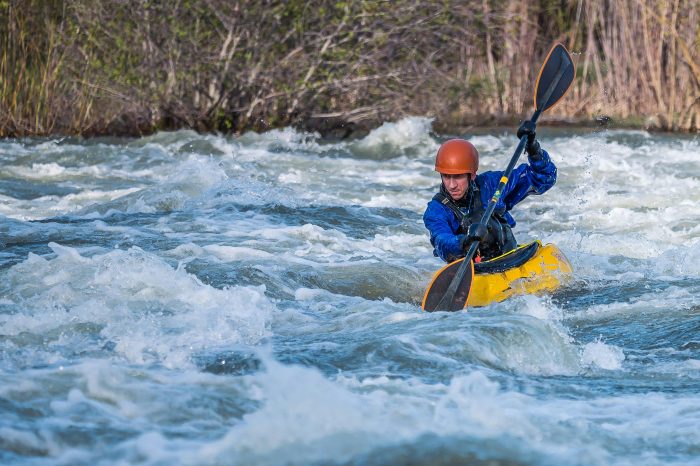
Kayaking with multiple sclerosis is entirely possible for many people with MS and can be one of the most rewarding physical activities available. The low-impact, seated nature of paddling, the cooling effect of being near water, and the mental health benefits of time spent outdoors make kayaking particularly well suited to the MS experience.
That said, MS presents specific challenges on the water that are worth understanding before heading out. Heat sensitivity, fatigue, balance difficulties, and the unpredictable nature of MS symptoms all require practical consideration and preparation.
This guide covers the key considerations for kayaking with MS, how to adapt your paddling to manage symptoms, and how to get the most out of time on the water.
Medical disclaimer: This article is intended as practical paddling advice. It is not a substitute for medical advice. Always consult your neurologist before starting or returning to kayaking with MS, particularly if your symptoms have changed recently or you have had a recent relapse. Follow their specific guidance on physical activity and heat management.
Why Kayaking Suits People With MS
Low impact on the joints and body – The seated paddling position places minimal load on the legs and lower body, which is significant for people with MS who experience weakness, spasticity, or reduced sensation in the lower limbs. Unlike walking, running, or cycling, kayaking does not require the legs to bear weight or generate propulsion. The upper body does the work while the lower body rests.
Near water cooling effect – Heat sensitivity, known as Uhthoff’s phenomenon, is one of the most common and significant MS symptoms affecting physical activity. Even a small rise in core body temperature can temporarily worsen MS symptoms including vision, coordination, strength, and cognitive function. Being on the water provides natural cooling through evaporation, splash, and the cooler air temperature typically found near water surfaces. This makes kayaking more thermally manageable than many land-based activities.
Adjustable intensity – Kayaking intensity is entirely self-directed. A gentle recreational paddle on calm water is low intensity and manageable on days when energy is limited. A more vigorous paddle is available on better days. This flexibility suits the variable nature of MS where symptom severity changes from day to day and even hour to hour.
Mental health benefits – The mental health benefits of time on the water are well documented. For people managing a chronic condition like MS, the combination of physical activity, nature exposure, and the sense of achievement that comes from paddling supports psychological wellbeing in a way that complements medical treatment.
Heat Sensitivity and Kayaking With MS
Heat sensitivity is the most important MS-specific consideration for kayaking. Understanding it and managing it carefully makes the difference between a safe, enjoyable paddle and one that temporarily worsens symptoms.
What is Uhthoff’s phenomenon?
Uhthoff’s phenomenon is the temporary worsening of MS symptoms caused by an increase in core body temperature. It occurs because heat slows the already-impaired nerve conduction in damaged myelin. Symptoms that worsen with heat include vision, balance, coordination, strength, fatigue, and cognitive clarity. These symptoms typically resolve when the body cools down but can be frightening and disabling on the water if not anticipated and managed.
How to manage heat sensitivity while kayaking
Paddle during the cooler parts of the day. Early morning paddles are significantly cooler than midday sessions. Avoid paddling between 10am and 3pm in warm weather when temperatures and UV intensity are highest.
Wear cooling clothing – Lightweight, UV-protective, moisture-wicking clothing cools through evaporation. Some people with MS find that a cooling vest worn over paddling clothing provides significant additional protection against heat-related symptom worsening.
Use water to cool down – Splashing water on the face, neck, and wrists during a paddle provides direct cooling at the body’s key heat dissipation points. A small bottle of cool water kept within reach on the deck provides a convenient cooling tool throughout the session.
Stay well hydrated – Dehydration raises core body temperature and worsens the effects of heat on MS symptoms. Carry significantly more water than you think you need and drink regularly throughout the paddle regardless of whether you feel thirsty.
Know when to stop – If MS symptoms begin to worsen during a paddle, particularly vision, balance, or coordination, stop paddling and cool down immediately. Do not push through worsening symptoms in heat. Get to shore, cool down, and rest.
Read: Kayaking in Cold Weather
Fatigue and Energy Management
MS fatigue is different from ordinary tiredness. It is a profound, sometimes overwhelming exhaustion that does not necessarily relate to physical exertion and that can arrive suddenly during activity. Managing MS fatigue on the water requires specific strategies.
Plan for the return journey – MS fatigue can arrive suddenly and make the return paddle significantly harder than the outward journey. Always plan to turn back at the halfway point of your energy reserves rather than the halfway point of the distance. If you feel 70% fatigued at the halfway distance, turn back. Arriving at the furthest point from shore with insufficient energy to return is a serious safety situation.
Keep sessions short – Start with sessions of 20 to 30 minutes and build up gradually as you establish how your MS fatigue responds to kayaking. There is no benefit to pushing beyond what your energy allows and doing so risks a dangerous fatigue episode on the water.
Rest before paddling – Paddling when already fatigued from other activities compounds the risk of MS fatigue on the water. Schedule paddles for times when you are well rested and avoid paddling on days following poor sleep, demanding activities, or stress.
Recognise early fatigue warning signs – Learn to recognise the early signs that MS fatigue is building during a paddle. Common early signs include reduced paddle stroke power, increased effort to maintain direction, mental fogginess, and a general sense of heaviness. Act on these early signs by heading to shore rather than waiting until fatigue is severe.
Balance and Coordination
MS can affect balance and coordination through damage to the cerebellum and sensory pathways. These effects are relevant to kayaking in specific ways.
Entry and exit – Getting in and out of a kayak requires balance and coordination that may be affected by MS. A wide, stable sit-on-top kayak with a gradual beach entry, the paddle brace method, and a companion to assist significantly reduces the balance demands of entry and exit.
On the water stability – A wide, stable kayak hull reduces the active balance correction required during paddling. For people with MS-related balance difficulties, a wider kayak is significantly more appropriate than a narrow one.
Foot and leg sensation – Reduced sensation in the feet and legs is common in MS and affects the foot peg positioning feedback that guides comfortable kayak trim. Check foot peg position visually rather than relying on feel and ensure the knees are slightly bent and comfortable before launching.
Read: Best Kayak Foot Pegs
Upper Limb Weakness and Paddle Choice
MS-related weakness in the hands, wrists, and arms affects paddle control and endurance. Choosing the right paddle significantly reduces the impact of upper limb weakness on the paddling experience.
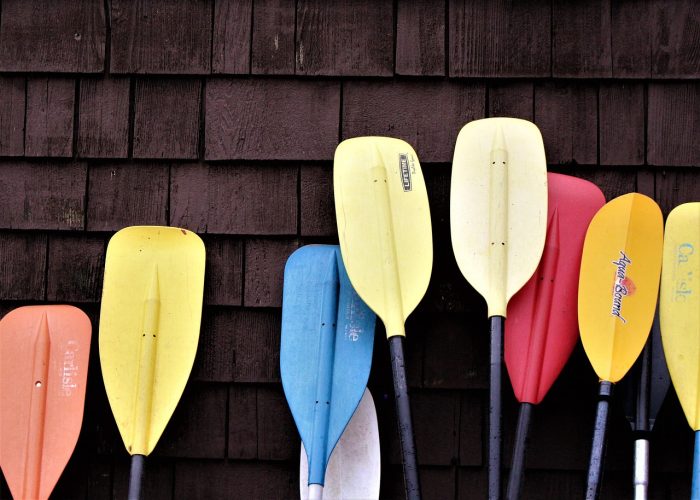
Choose a lightweight paddle – A lighter paddle requires less effort to lift and move with every stroke. Over a one to two hour paddle, the cumulative difference between a heavy aluminium paddle and a lightweight carbon fibre or fibreglass alternative is enormous for someone managing MS-related fatigue and weakness.
Consider ergonomic grips – Reduced grip strength and hand weakness are common MS symptoms. Foam or rubber grip tape wrapped around the paddle shaft reduces the grip force required and makes the paddle easier to hold throughout a longer session.
Adjust feathering angle – Wrist rotation during the recovery stroke can be tiring for people with MS-related wrist weakness. Reducing the feathering angle to zero or near-zero reduces the wrist rotation required with each stroke.
Read: What Size Kayak Paddle Do I Need?
Choosing the Right Kayak for MS
Wide, stable sit-on-top kayak
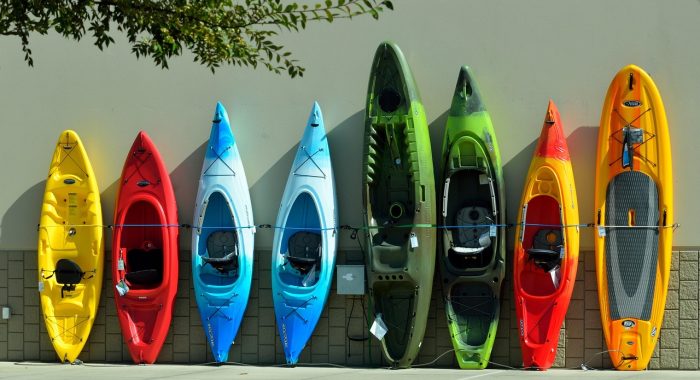
A wide, stable sit-on-top kayak is strongly recommended for most people with MS. The open deck makes entry and exit significantly easier than a sit-inside design, the stable hull reduces balance demands during the paddle, and the self-draining design means water on the deck drains away automatically without requiring action.
Inflatable kayaks
Inflatable kayaks are a practical option for people with MS who need to minimise the physical demands of transporting and launching. They are lighter than hardshell alternatives and can be transported in a bag rather than lifted onto a roof rack, which reduces the physical demands before and after paddling.
Read: Best Inflatable Kayaks Under USD$500
Kayak cart
A kayak cart eliminates the need to carry the kayak to and from the water. For people with MS-related fatigue and lower limb weakness, a kayak cart is one of the most practical additions to the paddling kit.
Supportive seat
A well-padded seat with proper lumbar support reduces overall body fatigue during the paddle. For people with MS who experience spasticity or discomfort in the seated position, an aftermarket seat with adjustable back support is worth the investment.
Read: Best Kayak Seats
MS Relapses and Paddling
Do not paddle during an active MS relapse. A relapse involves new or worsening neurological symptoms caused by inflammation in the central nervous system. Paddling during a relapse risks overheating, falls during entry and exit, and an inability to manage a capsize safely.
Wait until the relapse has fully resolved and your neurologist has confirmed you are in a stable phase before returning to kayaking. Return gradually after a relapse, starting with very short sessions on calm water close to shore, and build up as confidence and stability return.
Safety Considerations
Always paddle with a companion – Paddling alone with MS is not safe. The unpredictable nature of MS symptoms, the risk of sudden fatigue, heat-related symptom worsening, and balance difficulties all require a companion who can assist and call for help if needed. Always paddle with at least one companion who knows about your MS and what to do if symptoms worsen on the water.
Wear a medical ID – Wear a waterproof medical ID identifying you as having MS and listing any relevant medications. In an emergency where you are unable to communicate, this information helps first responders provide appropriate care.
Know your triggers – Identify your personal MS symptom triggers including heat, fatigue, stress, and illness and manage them carefully before and during every paddle. Cancel or shorten sessions when trigger factors are present.
Have an emergency plan – Agree on a clear emergency plan with your companion before every paddle. The plan should cover what to do if MS symptoms worsen significantly on the water, how to get to shore quickly, and when to call emergency services.
MS and Adaptive Paddling Programmes
Paddle Australia and state-based paddling organisations offer adaptive paddling programmes that may be appropriate for people with more significant MS-related disability. These programmes provide specialist equipment, trained instructors, and a supported environment for people who find independent recreational paddling challenging.
Australia:
- Paddle Australia — paddle.org.au — contact your state paddling organisation for information on adaptive paddling opportunities in your area
- MS Australia — msaustralia.org.au — provides activity and exercise resources specifically for people with MS including referrals to suitable programmes
- Paddle Victoria — vic.paddle.org.au — adaptive paddling coordinator can advise on All Abilities paddling opportunities in Victoria
United States:
- Paddle America — paddleamerica.com — directory of paddling clubs and outfitters across the US, many of which offer adaptive paddling sessions
- National Multiple Sclerosis Society — nationalmssociety.org — provides exercise and activity resources for people with MS including guidance on water sports
- Adaptive Sports USA — adaptivesportsusa.org — national resource for adaptive sport programmes including paddling for people with disabilities and chronic conditions
- American Canoe Association — americancanoe.org — offers adaptive paddling instruction and can connect paddlers with MS to qualified instructors
Frequently Asked Questions (FAQs)
Can you kayak with multiple sclerosis?
Yes. Many people with MS kayak regularly and safely with appropriate preparation and precautions. The key considerations are managing heat sensitivity, planning carefully for fatigue, choosing a wide stable sit-on-top kayak, always paddling with a companion, and getting neurologist clearance before starting or returning after a relapse.
Is heat a problem for kayaking with MS?
Heat sensitivity is one of the most significant MS-specific considerations for kayaking. Even a small rise in core body temperature can temporarily worsen MS symptoms. Paddle during cooler parts of the day, wear cooling clothing, use water to cool the face and neck during the paddle, stay well hydrated, and stop immediately if symptoms begin to worsen.
What type of kayak is best for someone with MS?
A wide, stable sit-on-top kayak is the most appropriate choice for most people with MS. The open deck makes entry and exit easier than a sit-inside design, the stable hull reduces balance demands, and the self-draining design is practical for paddlers with limited lower body function. An inflatable kayak is a practical alternative for its lighter weight and easier transport.
How do I manage MS fatigue when kayaking?
Plan to turn back at the halfway point of your energy reserves rather than the halfway point of the distance. Keep sessions short initially and build up gradually. Rest well before paddling. Learn to recognise the early signs of MS fatigue building during a paddle and act on them by heading to shore rather than pushing through.
Can I kayak during an MS relapse?
No. Do not paddle during an active relapse. Wait until the relapse has fully resolved and your neurologist has confirmed you are in a stable phase before returning to kayaking. Return gradually after a relapse with short sessions on calm water close to shore.
Should I tell my paddling companions about my MS?
Yes. Your companions should know about your MS, understand your specific symptoms and triggers, know what to do if symptoms worsen on the water, and know where your medical ID and any emergency medication are stored. A companion who is prepared provides significantly better support than one who is unaware of your condition.
Final Thoughts
Kayaking with MS is achievable for many people and can be one of the most rewarding physical activities available. The combination of low-impact upper body exercise, the cooling effect of being near water, the flexible intensity, and the mental health benefits of time outdoors make it well suited to the MS experience in a way that many land-based activities are not.
The most important principles are to manage heat carefully, plan conservatively for fatigue, always paddle with a companion, choose a stable sit-on-top kayak, and get neurologist clearance before starting or returning after a relapse.
Medical disclaimer: This article is intended as practical paddling advice. It is not a substitute for medical advice. Always consult your neurologist before kayaking with MS, particularly after a relapse or if your symptoms have changed recently.
For more on kayaking safely with health conditions, read our guides on kayaking with arthritis and kayaking for seniors.