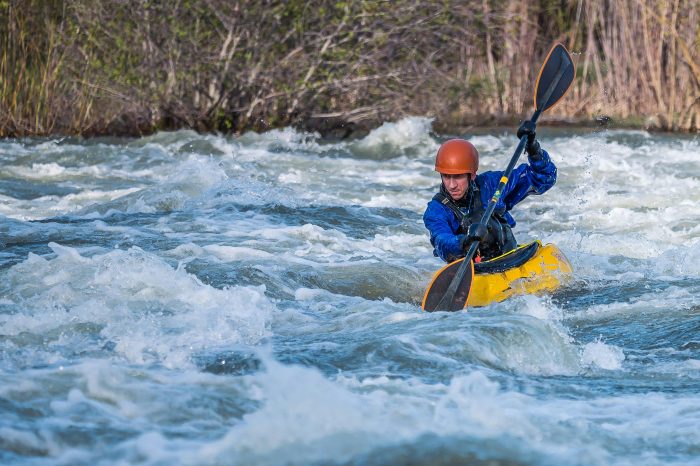
Returning to kayaking after a stroke, or taking up kayaking as part of stroke rehabilitation, is a goal for many stroke survivors. The combination of gentle upper body exercise, time in nature, and the sense of achievement and independence that comes from being on the water makes kayaking a genuinely valuable activity for stroke recovery and long-term wellbeing.
Stroke affects people differently and the considerations for kayaking after a stroke depend significantly on the type and severity of the stroke, the residual effects on movement, cognition, and communication, and the stage of recovery. This guide covers the key considerations, what to discuss with your rehabilitation team, and how to adapt kayaking to suit the stroke survivor’s specific needs.
Medical disclaimer: This article is intended as practical paddling advice. It is not a substitute for medical advice. Always consult your neurologist, rehabilitation physician, or occupational therapist before kayaking after a stroke. Never return to kayaking after a stroke without explicit medical clearance from your rehabilitation team.
Can You Kayak After a Stroke?
Many stroke survivors kayak successfully and find it a rewarding part of their recovery and ongoing active lifestyle. Whether kayaking is appropriate depends on the specific residual effects of the stroke, the stage of recovery, and your rehabilitation team’s assessment of your current functional capacity.
Stroke can affect movement, strength, coordination, balance, cognition, communication, vision, and fatigue in ways that are relevant to kayaking safety. Not all of these effects are permanent and many improve significantly during rehabilitation. The timing of return to kayaking and the precautions required depend on which effects are present and how well they have resolved.
The most important step is to discuss kayaking specifically with your neurologist, rehabilitation physician, or occupational therapist. They can assess your current functional capacity and advise on whether kayaking is appropriate, what precautions are needed, and when to return.
How Stroke Affects Kayaking
Hemiplegia and hemiparesis – Hemiplegia is complete paralysis on one side of the body. Hemiparesis is weakness on one side. Both are common effects of stroke and significantly affect the ability to paddle symmetrically. Paddling with one-sided weakness causes the kayak to turn toward the weaker side, requiring constant correction. Adaptive paddle techniques and equipment can address this effectively.
Balance and coordination – Stroke often affects balance and coordination through damage to the cerebellum or sensory pathways. Reduced balance affects stability during entry and exit and on the water, particularly in response to waves or boat wash. A wide, stable sit-on-top kayak significantly reduces the balance demands of recreational paddling.
Cognitive effects – Stroke can affect memory, attention, processing speed, and executive function. Cognitive effects relevant to kayaking include difficulty with spatial awareness and navigation, reduced ability to assess and respond to changing conditions, and impaired judgement about fatigue and risk. Paddle with a companion who can assist with navigation and decision-making.
Communication difficulties – Aphasia, the impairment of language and communication after stroke, affects many stroke survivors. Establishing clear non-verbal communication signals with paddling companions before launching is important for stroke survivors with aphasia. Agree on hand signals for stop, slow down, turn around, and I need help before every paddle.
Visual field defects – Stroke commonly causes visual field defects including hemianopia, where half of the visual field is lost. Visual field defects affect awareness of other vessels, obstacles, and conditions on one side. A companion who can monitor the affected side provides an important safety function for stroke survivors with visual field defects.
Post-stroke fatigue – Post-stroke fatigue is one of the most common and persistent effects of stroke. It is different from ordinary tiredness and can be profound and sudden. Managing post-stroke fatigue on the water requires the same careful energy management approach as ME/CFS and fibromyalgia. Plan to turn back well before fatigue sets in and keep sessions short initially.
Spasticity – Spasticity, the increased muscle tone and stiffness common after stroke, can affect paddle grip, arm movement range, and the ability to perform smooth, symmetrical strokes. Stretching and warm-up exercises before paddling reduce spasticity at the start of the session. An occupational therapist can advise on specific stretches and positioning aids relevant to your spasticity pattern.
What To Discuss With Your Rehabilitation Team
Before returning to kayaking after a stroke, discuss the following with your neurologist, rehabilitation physician, or occupational therapist:
- Is recreational kayaking appropriate given your current functional capacity and residual stroke effects?
- Are there any specific movement restrictions or precautions relevant to kayaking?
- How should post-stroke fatigue be managed during a paddle session?
- Are there any cognitive or communication considerations that affect safety on the water?
- What symptoms should prompt you to stop paddling and seek medical assistance?
- Is there any specific adaptive equipment that would support safer paddling given your specific stroke effects?
- When is the appropriate time in your recovery to return to kayaking?
An occupational therapist with experience in stroke rehabilitation is a particularly valuable resource for return to kayaking. They can assess your specific functional capacity, advise on adaptive equipment, and may be able to refer you to an adaptive paddling programme.
Adaptive Paddling Techniques for Stroke Survivors
One-sided paddling technique – For stroke survivors with significant hemiplegia or hemiparesis on one side, a modified one-sided paddling technique allows forward progress using primarily the unaffected side. The affected side provides whatever support it can without being forced through movements that exceed its current capacity. A kayak with a rudder controlled by foot pedals on the unaffected side significantly improves directional control for one-sided paddlers.
Hand splints and paddle grips – Stroke survivors with reduced grip on the affected side can use hand splints, paddle mitts, or grip straps that attach the hand to the paddle shaft without requiring sustained grip strength. These adaptive devices allow the affected arm to contribute to the stroke even when grip strength is insufficient to hold the paddle independently. Discuss paddle grip adaptations with your occupational therapist.
Outriggers for stability – Kayak outriggers attach to the sides of the kayak and provide additional lateral stability for paddlers with significant balance difficulties after stroke. They are used widely in adaptive paddling programmes and allow people with more significant balance impairment to paddle safely on calm water.
Supportive seating – Stroke survivors with trunk weakness or reduced core stability benefit from a high-back supportive kayak seat with lateral support. A seat that supports the trunk reduces the postural demands of paddling and allows more energy to be directed to the paddle stroke.
Getting In and Out of the Kayak After Stroke
Entry and exit is often the most physically demanding and highest risk part of kayaking for stroke survivors. Balance difficulties, one-sided weakness, and reduced coordination all increase the risk of a fall during entry and exit.
Choose a gradual beach entry – A gradual sandy beach where the kayak can be positioned in very shallow water and the stroke survivor can lower themselves onto the seat with minimal balance demands is the most appropriate entry point. Avoid docks, steep banks, and rocky shores.
Have a companion assist – A companion should always assist with entry and exit after stroke. The companion holds the kayak steady, provides a physical support point, and assists with positioning throughout the entry and exit process.
Take extra time – Move slowly and deliberately during every entry and exit. There is no rush. A controlled, unhurried entry is significantly safer than a rushed one for a stroke survivor managing balance and coordination difficulties.
Read: How to Get In and Out of a Kayak
Choosing the Right Kayak After Stroke
Wide, stable sit-on-top kayak – A wide, stable sit-on-top kayak is strongly recommended for stroke survivors returning to paddling. The open deck eliminates the risk of being trapped in an enclosed cockpit, the stable hull reduces balance demands significantly, and entry and exit is easier than a sit-inside design.
Kayak with a rudder – A rudder controlled by foot pedals on the unaffected side provides directional control without requiring symmetric paddle strokes. For stroke survivors with one-sided weakness, a rudder transforms the paddling experience by allowing course correction without complex stroke technique.
Inflatable kayak – A wide inflatable kayak is a practical option for stroke survivors as the lighter weight reduces the physical demands of transport and launch. Many inflatable kayaks are wide and stable with good sitting support.
Read: Best Inflatable Kayaks Under USD$500
Safety Considerations for Kayaking After Stroke
Always paddle with a companion – Paddling alone after stroke is not safe. Always paddle with at least one companion who knows about the stroke, understands the specific residual effects, and knows what to do if symptoms worsen on the water. A companion with first aid training is ideal.
Wear a medical ID – Wear a waterproof medical ID identifying you as a stroke survivor, listing any relevant medications, and including emergency contact details. In an emergency where communication is impaired, this information is critical for first responders.
Stay close to shore – Always paddle close to shore on calm, sheltered water. Being close to shore means a short distance to safety if post-stroke fatigue or other symptoms develop suddenly on the water.
Know the warning signs – Stop paddling immediately and return to shore if you experience any of the following: sudden severe headache, sudden weakness or numbness, sudden vision changes, sudden difficulty speaking or understanding speech, sudden dizziness or loss of balance, or any symptom that feels like the original stroke. Call emergency services immediately if these symptoms occur.
Carry communication equipment – Carry a fully charged mobile phone in a waterproof case within easy reach throughout every paddle. A companion with a phone provides backup communication. For stroke survivors with aphasia, having a communication card in the PFD pocket that identifies the condition and lists key information assists emergency responders.
Stroke Rehabilitation and Adaptive Paddling Programmes
Adaptive paddling programmes specifically designed for people with stroke and other neurological conditions are available through paddling organisations. These programmes provide specialist equipment, trained instructors familiar with stroke-related considerations, and a supported social environment that many stroke survivors find valuable for both rehabilitation and wellbeing.
Australia:
- Paddle Australia — paddle.org.au — contact your state paddling organisation for adaptive paddling programmes
- Stroke Foundation Australia — strokefoundation.org.au — provides activity resources and support for stroke survivors and carers
- EnableNSW and state equivalents — provide equipment and support for people with disability including stroke survivors returning to sport
United States:
- American Stroke Association — stroke.org — provides activity and rehabilitation resources for stroke survivors
- Paddle America — paddleamerica.com — directory of paddling clubs and outfitters, many of which offer adaptive paddling
- Adaptive Sports USA — adaptivesportsusa.org — national resource for adaptive sport programmes including paddling
United Kingdom:
- Stroke Association — stroke.org.uk — provides rehabilitation activity resources for stroke survivors
- British Canoeing — britishcanoeing.org.uk — adaptive paddling programmes and resources
Frequently Asked Questions (FAQs)
Can you kayak after a stroke?
Many stroke survivors kayak successfully with appropriate precautions and adaptive equipment. Whether kayaking is appropriate depends on the specific residual effects of the stroke and the stage of recovery. Always get explicit clearance from your neurologist or rehabilitation physician before returning to kayaking after a stroke.
When can I return to kayaking after a stroke?
The appropriate timing depends on the severity of the stroke, the residual effects, and your rehabilitation progress. There is no standard timeline as recovery varies significantly between individuals. Discuss the specific timing with your neurologist or rehabilitation physician. Most stroke survivors who return to kayaking do so in the later stages of rehabilitation when residual effects have stabilised and functional capacity has been assessed.
What type of kayak is best after a stroke?
A wide, stable sit-on-top kayak with a rudder is the most appropriate choice for most stroke survivors. The wide hull reduces balance demands, the open deck eliminates the risk of being trapped in a cockpit, and the rudder provides directional control without requiring symmetric paddle strokes.
Can I paddle if I have weakness on one side after a stroke?
Yes, with appropriate technique and equipment adaptations. A one-sided paddling technique, paddle grip adaptations, a rudder for directional control, and outriggers for additional stability all allow stroke survivors with one-sided weakness to paddle effectively on calm water. An occupational therapist can advise on the specific adaptations appropriate for your situation.
What should I do if I experience stroke-like symptoms while kayaking?
Stop paddling immediately and return to shore. Call emergency services immediately. Do not wait to see if symptoms resolve. Sudden headache, sudden weakness or numbness, sudden vision changes, sudden speech difficulties, and sudden loss of balance are all potential stroke warning signs that require immediate emergency medical assessment.
Are there adaptive paddling programmes for stroke survivors?
Yes. Paddle Australia and state-based paddling organisations offer adaptive paddling programmes that may be suitable for stroke survivors. Contact your state paddling organisation for information on adaptive paddling opportunities in your area.
Final Thoughts
Kayaking after a stroke is achievable for many survivors and can be a genuinely valuable part of recovery and long-term wellbeing. The gentle upper body exercise, the calming environment of being on the water, the sense of independence and achievement, and the social connection of paddling with others all contribute to the physical and psychological wellbeing of stroke survivors in ways that complement formal rehabilitation.
The most important principles are to get explicit clearance from your rehabilitation team, always paddle with a companion, choose a wide stable sit-on-top kayak with a rudder, stay close to shore on calm sheltered water, manage post-stroke fatigue carefully, and know the warning signs that require immediate emergency response.
Medical disclaimer: This article is intended as practical paddling advice. It is not a substitute for medical advice. Always consult your neurologist or rehabilitation physician before kayaking after a stroke. Never return to kayaking after a stroke without explicit medical clearance.
For more on kayaking safely with health conditions, read our guides on kayaking after knee or hip replacement and kayaking for seniors.