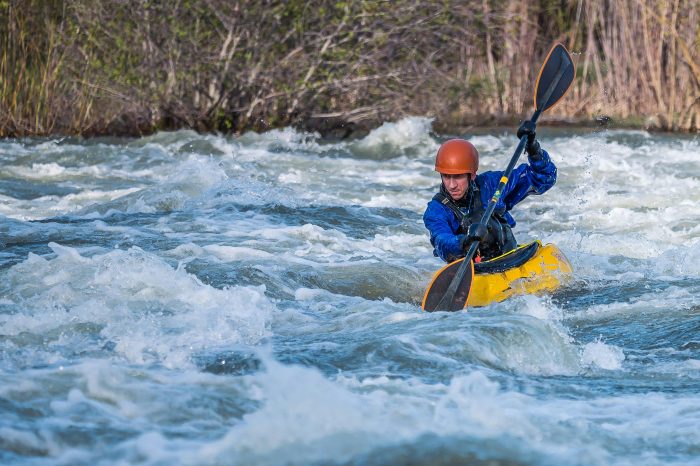
Kayaking with impaired vision is entirely manageable with the right preparation. Whether you wear glasses or contact lenses, there are practical steps you can take to protect your vision correction on the water and paddle with confidence.
This guide covers the pros and cons of glasses versus contacts for kayaking, practical tips for each, and the accessories that make the most difference.
Glasses vs Contacts for Kayaking: Which Is Better?
Neither option is universally better — both work well with the right precautions. The best choice depends on your prescription, how you paddle, and your personal comfort.
Glasses stay on your face without any effort and do not require touching your eyes on the water. The risk is losing them overboard or having them knocked off during a capsize. A retainer strap solves most of this problem and costs very little.
Contact lenses eliminate the risk of losing your glasses overboard and work well with any sunglasses or goggles you choose to wear. The risk is water contamination — getting water in your eyes while wearing contacts increases the risk of eye infection, particularly in freshwater. Daily disposable lenses reduce this risk significantly.
Tips for Kayaking With Glasses
Use a retainer strap
A glasses retainer strap is the single most important accessory for kayakers who wear glasses. It loops around the temples of your frames and sits at the back of your head, preventing your glasses from falling off during a capsize, a head turn, or a rough section of water. Look for a strap with an adjustable silicone grip that holds the temples firmly without being uncomfortable.
Use an anti-fog spray or wipe
Paddling generates heat and splashing creates sudden temperature changes, both of which cause glasses to fog. An anti-fog spray or wipe applied before launching keeps your lenses clear throughout the session. Most anti-fog treatments last several hours and are safe for coated lenses — check the product description before applying to prescription lenses with specialist coatings.
Apply a water repellent coating
A hydrophobic water repellent spray causes water droplets to bead and roll off your lenses rather than smearing across them. This is particularly useful in rain and choppy conditions. Apply before launching and reapply as needed during longer sessions.
Choose wrap-around frames
Wrap-around or sport-specific frames sit closer to the face and are less likely to be knocked off than standard frames. If you are buying new glasses and plan to kayak regularly, a wrap-around sport frame is worth considering.
Carry a microfibre cloth in a dry bag
A dry microfibre cloth stored in a small dry bag on deck allows you to clean your lenses during the paddle without them getting wet again immediately.
Consider a backup pair
If you rely heavily on your glasses, carrying a backup pair in a hard case in your hatch is worthwhile. A capsize in deep water where you cannot retrieve your glasses from the bottom is the worst-case scenario without a backup.
Tips for Kayaking With Contact Lenses
Use daily disposable lenses
Daily disposable contact lenses are the best option for kayaking. If water splashes into your eyes and contaminates the lenses, you can remove and discard them without losing a reusable pair. They are also the most hygienic option for outdoor water sports where hand washing between sessions is not always practical.
Avoid touching your eyes on the water
Waterways contain bacteria, parasites, and other microorganisms that can cause serious eye infections if they come into contact with contact lenses. Avoid rubbing your eyes on the water. If something gets in your eye, use sterile saline solution rather than river or lake water to rinse it.
Carry a lens case and solution
Store a small lens case with fresh solution in a waterproof dry bag on deck. If your lenses become uncomfortable, you can remove them and paddle without them for the remainder of the session rather than risking an eye infection.
Wear goggles or polarised sunglasses
Wearing goggles or wrap-around polarised sunglasses over your contacts provides a physical barrier against water splash and wind, reduces the risk of accidental eye contact with waterborne contaminants, and significantly reduces glare on the water.
Consider prescription goggles
Prescription swimming goggles are available for paddlers who prefer not to wear contact lenses but want clear vision without the risks associated with glasses on the water. They provide a sealed, waterproof environment for your eyes and eliminate the need for both glasses straps and contact lens hygiene on the water.
Frequently Asked Questions (FAQs)
Can you kayak with glasses?
Yes. Kayaking with glasses is straightforward with a retainer strap to prevent them from falling off during a capsize or rough conditions. An anti-fog treatment and a hydrophobic water repellent spray both help keep your lenses clear on the water.
Can you kayak with contact lenses?
Yes. Contact lenses work well for kayaking. Daily disposable lenses are the best option as they can be discarded if contaminated by water. Avoid touching your eyes on the water and carry a lens case with fresh solution in a waterproof dry bag as a backup.
What happens to glasses if you capsize in a kayak?
Without a retainer strap, glasses can fall off during a capsize and sink in deep water. With a retainer strap properly adjusted, glasses stay attached to your head during a capsize and remain retrievable even if they come off your face. Always use a retainer strap when kayaking.
Are prescription goggles good for kayaking?
Prescription goggles are a practical alternative to both glasses and contact lenses for kayaking. They provide clear vision in a sealed, waterproof environment and eliminate concerns about losing glasses overboard or water contaminating contact lenses. They are widely available online in a range of prescriptions.
What are the best sunglasses for kayaking?
Polarised sunglasses are the best choice for kayaking as they reduce glare on the water significantly. For glasses wearers, polarised clip-ons that attach over existing frames are a practical option. For contact lens wearers, any quality polarised sport sunglass works well.
Is it safe to open your eyes underwater with contact lenses?
No. Opening your eyes underwater while wearing contact lenses significantly increases the risk of eye infection. Waterways contain bacteria and microorganisms that can cause serious conditions including acanthamoeba keratitis. If you capsize and open your eyes underwater while wearing contacts, remove and discard the lenses as soon as possible and rinse your eyes with sterile saline solution.
Final Thoughts
Kayaking with glasses or contact lenses is perfectly manageable with a small amount of preparation. A retainer strap is the most important investment for glasses wearers. Daily disposable contacts and good hygiene habits make contact lens wear practical for most paddlers.
The most important precaution regardless of which option you choose is having a backup plan — whether that is a spare pair of glasses in a hard case in your hatch, or a lens case with fresh solution in a dry bag on deck.
For more on kayaking safety and preparation, read our guides on is kayaking dangerous and what to wear kayaking in the rain.