One of the most common frustrations for new kayakers is that the kayak keeps turning instead of going straight. Every few strokes the bow drifts off course and the paddler has to correct, which is tiring and inefficient. The good news is that paddling straight is a technique issue that improves quickly with the right adjustments.
This guide covers the main reasons a kayak goes off course and the practical fixes for each one.
Why Does a Kayak Keep Turning?
Understanding why a kayak turns helps identify the right fix. The most common causes are:
Uneven stroke power – The most common reason beginners struggle to paddle straight is that one side of the stroke is stronger than the other. Everyone has a dominant side and without conscious effort the dominant arm pulls harder, turning the bow toward the weaker side.
Incorrect paddle technique – A paddle stroke that is too wide or too curved pulls the bow sideways rather than driving it forward. The path of the blade through the water directly affects the direction the kayak travels.
Wind and current – External forces including wind and current push the kayak off course regardless of paddling technique. A crosswind in particular causes the bow to turn downwind, a phenomenon called weathercocking.
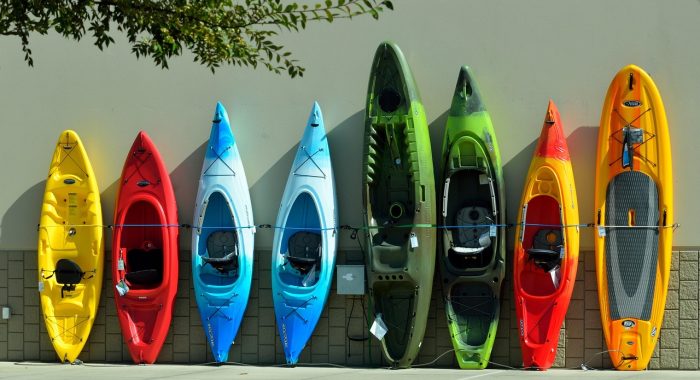
Kayak design – Some kayaks are more prone to turning than others. Short, wide recreational kayaks are designed for manoeuvrability and turn easily. Long, narrow sea kayaks are designed to track straight and hold a course with minimal effort. A kayak that turns easily is not necessarily defective — it may simply be designed that way.
Incorrect trim – If the kayak sits unevenly in the water with more weight at one end or one side, it will track poorly and turn toward the heavier side. Uneven weight distribution affects tracking significantly.
Fix 1: Use a Vertical Paddle Stroke
The most impactful technique change for paddling straighter is to use a more vertical paddle stroke.
A low-angle stroke where the paddle shaft is nearly horizontal sweeps the blade in a wide arc away from the hull. This arc pulls the bow sideways with each stroke rather than driving it forward.
A higher-angle stroke where the paddle shaft is more vertical keeps the blade closer to the hull throughout the stroke. A blade that travels close to and parallel to the hull pushes the kayak forward rather than sideways.
How to do it:
- Reach forward and plant the blade fully in the water close to the hull near your feet.
- Pull the blade straight back along the hull and lift it out of the water when it reaches your hip.
- Keep the blade as close to the hull as possible throughout the stroke.
- The shaft angle should be steeper than you think is natural at first.
Fix 2: Keep Your Strokes Symmetrical
Equal power on both sides of the kayak is essential for straight-line tracking. Most beginners inadvertently pull harder on their dominant side which turns the bow toward the weaker side.
How to do it:
- Focus on using your torso to power each stroke rather than your arms.
- Rotate your shoulders and torso with each stroke so that both sides of your body contribute equally to the paddle power.
- A stroke powered by torso rotation is naturally more symmetrical than one powered by the arms alone.
A useful check is to look at your wake behind the kayak. A straight wake indicates symmetrical strokes. A zigzag wake indicates uneven power on the two sides.
Fix 3: Use Correction Strokes
Even with good technique, occasional correction strokes are needed to maintain a straight course. The two most practical correction strokes for beginners are the stern draw and the J-stroke.
Stern draw – At the end of a forward stroke, rather than lifting the blade from the water, push the blade away from the stern. This pushes the stern sideways and turns the bow toward the side of the stroke. Use it when the bow has drifted away from the desired course on that side.
J-stroke – The J-stroke combines a forward stroke with a small correction at the end. As the blade reaches the hip, rotate the grip hand so the blade angles away from the hull and push slightly outward before lifting. The curved path of the blade at the end of the stroke resembles the letter J and corrects the natural turning tendency without requiring a separate correction stroke.
The J-stroke is worth learning as it allows course correction without interrupting the paddling rhythm.
Fix 4: Use a Skeg or Rudder
If your kayak has a skeg or rudder, use it. Both are designed specifically to help the kayak track straight and reduce the effort required to maintain course.
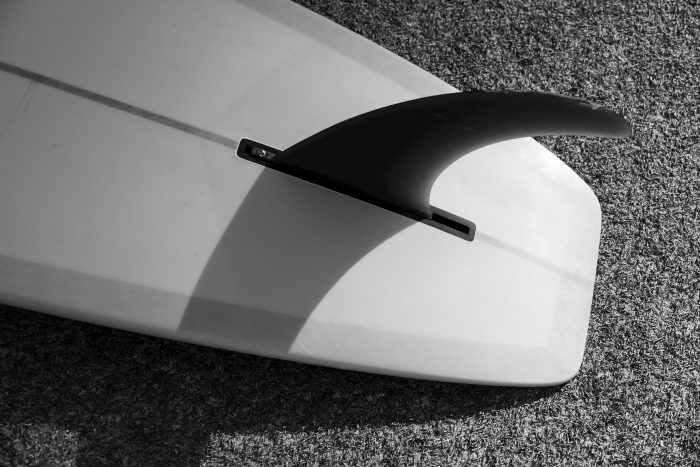
A skeg is a fixed or retractable fin mounted under the stern. Deploying it increases resistance at the stern which reduces the tendency to turn. Deploy the skeg partially in crosswind conditions and fully in strong crosswind or headwind conditions.
A rudder is a steerable fin mounted at the stern, controlled by foot pedals. It provides active directional control and can correct course continuously without any paddle correction strokes.
Read: Skeg vs Rudder: What Is the Difference?
Read: How to Choose and Install a Kayak Skeg
Fix 5: Adjust Your Foot Pegs
Incorrectly positioned foot pegs affect both comfort and technique. Foot pegs set too far away flatten the lower back and reduce torso rotation. Foot pegs set too close cause the knees to rise above the hips which also affects posture and stroke mechanics.
Correct foot peg position places the knees slightly bent and the thighs resting lightly against the hull or thigh braces. In this position, torso rotation is natural and full, which supports a symmetrical forward stroke.
Read: Best Kayak Foot Pegs
Fix 6: Check Your Weight Distribution
Uneven weight distribution causes the kayak to sit lower on one side or at one end, which affects tracking significantly.
Side to side balance: Sit centrally in the seat with your weight evenly distributed across both hips. Leaning to one side shifts the waterline and causes the kayak to track toward the lower side.
Bow to stern balance: Keep heavier items in the centre of the kayak rather than at one end. A kayak that sits lower at the bow tracks poorly and turns easily. A kayak that sits lower at the stern is more stable but also turns more readily.
Fix 7: Choose a Kayak That Tracks Well
Some kayaks are designed to turn easily and will never track as straight as a kayak designed for straight-line performance regardless of technique. If straight-line tracking is important to you and your kayak turns frustratingly easily, the kayak design may be contributing to the problem.
Longer, narrower kayaks track straighter than shorter, wider ones. A kayak with a longer waterline holds its course with less effort. A kayak with significant rocker turns more easily but tracks less straight.
If you are paddling a very short recreational kayak and find straight-line tracking frustrating, trying a longer kayak may solve the problem entirely regardless of technique.
Read: What Size Kayak Do I Need?
Dealing With Wind and Current
Even with perfect technique, wind and current push a kayak off course. Understanding how to compensate for external forces makes a significant difference to straight-line paddling in real-world conditions.
Crosswind correction: In a crosswind, the bow turns downwind due to weathercocking. Compensate by paddling slightly harder on the downwind side to maintain the desired course. Deploying a skeg reduces weathercocking significantly and reduces the correction required.
Current correction: In moving water, current pushes the kayak downstream of the intended course. To maintain a straight course across a current, angle the bow slightly upstream and allow the current to push the kayak diagonally across to the intended destination. This technique is called ferrying and is a fundamental river paddling skill.
Read: Why Is My Kayak Going in Circles?
Practice Drills for Paddling Straight
The wake check – After every ten strokes look back at your wake. A straight wake means straight paddling. A curved or zigzag wake identifies which side needs more power or correction.
The buoy or marker drill – Choose a fixed point on the water or shore and paddle directly toward it without looking away. The fixed target provides immediate feedback on whether the kayak is tracking toward it.
The eyes closed drill – In calm conditions with no other waterway users nearby, close your eyes and take ten forward strokes. Open your eyes and check how far off course the kayak has drifted and which direction. This reveals your dominant side and how much correction is needed.
Paddle alongside a fixed line – Paddle alongside a straight shoreline, jetty, or line of buoys and try to maintain a constant distance from it throughout the paddle. Any deviation from the fixed reference is immediately visible.
Frequently Asked Questions (FAQs)
Why does my kayak keep turning to one side?
The most common cause is uneven stroke power with the dominant arm pulling harder on one side. Focus on powering each stroke with torso rotation rather than arm strength to equalise the power on both sides. Also check that you are sitting centrally in the seat with your weight evenly distributed.
How do I paddle a kayak in a straight line?
Use a vertical stroke with the blade close to the hull, power the stroke with torso rotation rather than arm strength, keep strokes symmetrical on both sides, and use a skeg or rudder if your kayak has one. Check your wake regularly to get immediate feedback on whether you are paddling straight.
Why does my kayak turn into the wind?
Weathercocking is the tendency of a kayak to turn its bow into the wind in crosswind conditions. Deploy a skeg partially to reduce weathercocking. Edge the kayak slightly toward the wind and paddle harder on the downwind side to compensate.
Does a longer kayak go straighter?
Yes. Longer kayaks with a longer waterline track straighter than shorter kayaks. If straight-line tracking is important and your current kayak turns frustratingly easily, trying a longer kayak may solve the problem more effectively than technique changes alone.
What is the J-stroke in kayaking?
The J-stroke is a forward stroke with a small correction at the end. As the blade reaches the hip, the grip hand rotates so the blade angles away from the hull and pushes slightly outward before lifting. The curved path resembles a J and corrects the natural turning tendency without requiring a separate correction stroke.
How do I stop my kayak from zigzagging?
Zigzagging is caused by alternating correction strokes that overcorrect from side to side. Use smaller, more frequent corrections rather than large correction strokes. A vertical stroke with the blade close to the hull reduces the amount of correction needed with each stroke.
Final Thoughts
Paddling straight is a skill that develops naturally with practice. The most impactful changes for most beginners are using a more vertical stroke with the blade close to the hull and focusing on torso rotation rather than arm power to equalise stroke strength on both sides.
Check your wake regularly as immediate feedback, deploy a skeg or rudder if your kayak has one, and be patient. Most paddlers find that straight-line tracking improves significantly within a few sessions of focused practice.
For more on kayaking technique and equipment, read our guides on what size kayak paddle do I need and why is your kayak unstable.