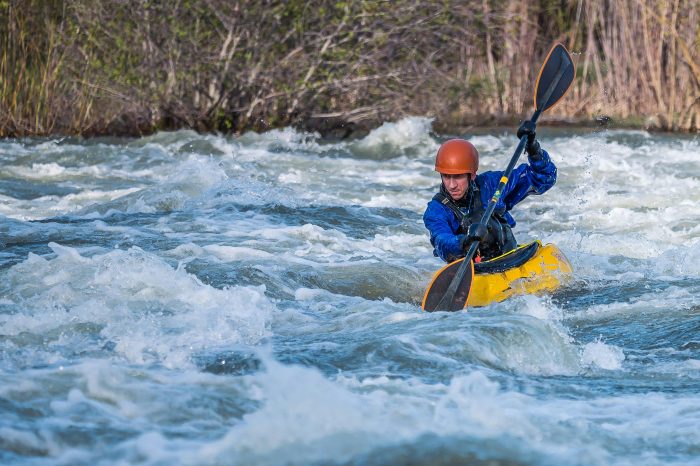
Kayaking with sleep apnoea (or apnea) is achievable for many people, but it comes with specific safety considerations that most kayaking guides never address. The condition, which causes repeated interruptions to breathing during sleep, affects alertness, reaction time, and fatigue levels in ways that are directly relevant to water safety, particularly for untreated or poorly managed sleep apnoea.
This guide covers the key considerations for kayaking with sleep apnoea, including daytime sleepiness and its implications for water safety, CPAP equipment for kayak camping trips, and the honest distinction between well-treated and undertreated sleep apnoea when it comes to paddling safely.
Medical disclaimer: This article is intended as practical paddling advice. It is not a substitute for medical advice. Always consult your doctor or sleep specialist before kayaking with sleep apnoea, particularly if your condition is untreated, poorly managed, or associated with significant daytime sleepiness. Follow their specific guidance on physical activity and water safety.
Understanding Sleep Apnoea and Kayaking
Sleep apnoea causes repeated pauses in breathing during sleep, leading to fragmented, poor-quality sleep regardless of how many hours are spent in bed. The most common form, obstructive sleep apnoea (OSA), occurs when the upper airway collapses repeatedly during sleep, causing the brain to partially wake to restore breathing.
The symptoms most relevant to kayaking are:
Excessive daytime sleepiness
Fragmented sleep leads to significant daytime fatigue and sleepiness in many people with sleep apnoea, particularly those whose condition is untreated or undertreated. This fatigue affects alertness, concentration, reaction time, and judgment — all of which matter on the water.
Impaired cognitive function
Chronic sleep deprivation from untreated sleep apnoea affects decision-making, spatial awareness, and the ability to respond quickly and appropriately to unexpected situations. These are relevant to navigation, reading water conditions, and self-rescue.
Variable day-to-day function
Sleep quality and daytime alertness can vary significantly from night to night for people with sleep apnoea, depending on factors including alcohol consumption, sleep position, and CPAP compliance. This day-to-day variability is worth factoring into decisions about when to paddle.
The Critical Safety Consideration: Drowning Risk
This is the most important and least discussed consideration for kayaking with sleep apnoea, and it deserves honest, direct treatment.
In a capsize situation, the normal arousal response — the reflex that causes a person to wake and respond when water enters the airway — is a critical survival mechanism. Research on drowning has identified that this arousal response may be blunted in people with untreated obstructive sleep apnoea, potentially increasing the risk of a fatal outcome in a capsize compared to someone without the condition.
This does not mean people with sleep apnoea cannot or should not kayak. It means that the standard safety measures — wearing a PFD at all times, paddling on calm water, paddling with a companion, and never paddling when excessively fatigued — are not optional precautions for someone with sleep apnoea. They are essential ones.
Never paddle with untreated sleep apnoea on open or rough water. The combination of impaired alertness, potential fatigue, and a potentially blunted arousal response in a capsize represents a genuinely elevated risk that warrants treating safety precautions as non-negotiable rather than advisory.
Treated vs Untreated Sleep Apnoea
The risk profile for kayaking with well-treated sleep apnoea is substantially different from that of untreated or poorly managed sleep apnoea.
Well-treated sleep apnoea
For people whose sleep apnoea is well managed — good CPAP compliance, genuinely restorative sleep, minimal daytime sleepiness — the condition’s specific risks on the water are significantly reduced. Many people with well-treated sleep apnoea kayak regularly without incident, and with the standard safety precautions in place, the elevated risk compared to someone without the condition is much smaller.
Untreated or poorly managed sleep apnoea
For people whose sleep apnoea is undiagnosed, untreated, or where CPAP compliance is poor and daytime sleepiness remains significant, the risks described above are genuine and meaningful. Paddling on open water in this situation, particularly alone or in challenging conditions, is not advisable.
The honest self-assessment question: before any paddling session, assess honestly whether daytime sleepiness is significant that day. If the answer is yes, postpone the session. Daytime sleepiness that makes driving unsafe also makes kayaking unsafe.
Practical Safety Precautions
Never paddle alone – This is the single most important precaution for anyone with sleep apnoea, particularly untreated or variable sleep apnoea. A companion can recognise if alertness or responsiveness becomes concerning and can assist or call for help in a capsize situation.
Always wear a properly fitted PFD – A properly fitted, correctly fastened PFD provides buoyancy that supports the head above water even in an unconscious or incapacitated paddler. For someone with sleep apnoea, this is not a guideline — it is essential safety equipment that should never be removed while on the water.
Read: 6 of the Best Life Jackets for Kayak Fishing
Paddle only when well rested – Do not paddle on days when significant daytime sleepiness is present. The same standard that applies to driving — if you are too tired to drive safely, you are too tired to paddle safely — applies directly to kayaking.
Choose calm, sheltered water – Calm, sheltered water reduces the likelihood of capsize and the demands on alertness and reaction time. This is good advice for any paddler but particularly important for someone managing sleep apnoea.
Keep sessions shorter when fatigue is present – Even on days when daytime sleepiness is manageable rather than severe, keeping sessions shorter and staying close to shore reduces overall exposure to risk as fatigue accumulates during the session.
Carry a means of communication – Carry a fully charged mobile phone in a waterproof case on every paddle.
Read: Best Waterproof Phone Cases for Kayaking
CPAP Equipment and Kayak Camping
For people who use CPAP therapy and want to include kayak camping in their paddling, the equipment considerations are practical and manageable with planning.
Power supply options
Standard CPAP machines require mains power, which is not available at a remote campsite. Options for powering a CPAP while kayak camping include:
- Portable battery packs designed specifically for CPAP machines — these are available from CPAP equipment suppliers and provide one to several nights of power depending on capacity and machine settings
- 12V adapters for car-based camping that involves driving to the launch point
- Solar charging systems for multi-day trips where daytime charging is possible
Discuss specific power options with your CPAP equipment supplier before a first kayak camping trip, as compatibility varies between machines and battery systems.
Travel CPAP machines
A travel CPAP machine is worth considering specifically for kayak camping, for two reasons. First, travel CPAPs are significantly smaller and lighter than standard machines, taking up less space in a hatch and weighing less to carry. Second, several travel CPAP models use humidity discs or integrated humidification systems rather than a water chamber, eliminating the need to carry distilled water — a meaningful practical advantage when camping remotely where distilled water is not available.
The ResMed AirMini is one of the most widely used travel CPAP options and uses HumidX moisture-exchange discs rather than a water tank. Discuss whether a travel CPAP is appropriate for your specific therapy needs with your sleep specialist or CPAP supplier before switching from your regular machine for a camping trip, as pressure settings and therapy modes vary between devices.
Waterproofing CPAP equipment
CPAP machines, tubing, and masks are not waterproof and must be stored in a dedicated dry bag during transport and paddling, separate from any gear that might be accessed mid-session. A rigid dry case provides better crush protection than a soft dry bag for this purpose.
Read: Kayak Camping: What to Pack for an Overnight Paddling Trip
The question of skipping CPAP for one night
Some people consider skipping CPAP for a single camping night to avoid the equipment complexity. This is worth discussing with your sleep specialist before a trip — the effect of one missed night of CPAP treatment on next-day alertness and function varies significantly between individuals, and for some people it results in significant next-day impairment that would affect paddling safety.
Humidity and altitude considerations
If kayak camping involves significant altitude changes, discuss CPAP pressure settings with your sleep specialist in advance, as some machines require adjustment at altitude. Humidity settings may also need adjustment in very different climates from home use.
Alcohol and Sleep Apnoea on Kayaking Trips
Alcohol significantly worsens sleep apnoea by relaxing the upper airway muscles and increasing the frequency and severity of apnoea events during sleep. For people with sleep apnoea, alcohol consumption the night before a paddling day — even a moderate amount — can meaningfully worsen next-day sleepiness and impair alertness on the water.
This is worth being aware of on multi-day kayak camping trips where alcohol may be part of the camp experience, and worth factoring into decisions about whether to paddle the following morning.
Choosing the Right Kayak
Wide, stable sit-on-top kayak – A wide, stable sit-on-top kayak reduces the likelihood of capsize, which is particularly relevant given the drowning risk considerations discussed above. This is the most important equipment choice for a paddler with sleep apnoea.
Comfortable, supportive seat – A well-padded seat with good back support reduces overall fatigue during a session, which helps manage the cumulative effect of pre-existing tiredness from poor sleep quality.
Read: Best Kayak Seats
Kayak cart – A kayak cart reduces the physical effort of transporting the kayak to and from the water, conserving energy for the paddle itself — particularly relevant on days when energy levels are already reduced from poor sleep.
Read: Best Kayak Carts and Trolleys
Resources
Australia:
- Sleep Health Foundation Australia — sleephealthfoundation.org.au — patient resources on sleep apnoea, CPAP therapy, and daytime function
- Australasian Sleep Association — sleep.org.au — clinical resources and specialist finder
United States:
- American Academy of Sleep Medicine — aasm.org — sleep apnoea resources and treatment guidance
- Sleep Foundation — sleepfoundation.org — accessible patient information on sleep apnoea
United Kingdom:
- British Lung Foundation (Asthma + Lung UK) — asthmaandlung.org.uk — sleep apnoea resources
Frequently Asked Questions (FAQs)
Can you kayak with sleep apnoea?
Yes, with appropriate precautions — particularly always wearing a PFD, never paddling alone, paddling only on calm water, and postponing sessions on days when significant daytime sleepiness is present. The risk profile is substantially better for people whose sleep apnoea is well treated and well managed than for those with untreated or poorly controlled OSA.
Is sleep apnoea dangerous for kayaking?
Untreated or poorly managed sleep apnoea presents genuine, specific risks on the water — primarily through impaired alertness and reaction time, and a potentially blunted arousal response in a capsize situation. Well-treated sleep apnoea with good CPAP compliance and minimal daytime sleepiness is a much lower-risk situation, particularly with standard safety precautions in place.
Can I kayak camp with a CPAP machine?
Yes, with planning. Portable battery packs designed for CPAP machines provide one to several nights of power without mains electricity, and CPAP equipment can be safely transported in a dedicated dry bag or rigid dry case. Other options include travel CPAPs which do not require distilled water to work. Discuss specific power and equipment options with your CPAP supplier before a first kayak camping trip.
Should I skip CPAP for a kayak camping night?
Discuss this specifically with your sleep specialist before deciding. The effect of one missed night varies significantly between individuals, and for some people it results in meaningful next-day impairment that would affect paddling safety. A portable battery solution is generally preferable to skipping treatment.
How does alcohol affect sleep apnoea and kayaking?
Alcohol significantly worsens sleep apnoea by relaxing the upper airway muscles, increasing the frequency and severity of apnoea events. Alcohol consumption the night before a paddling day can meaningfully worsen next-day sleepiness and impair alertness on the water.
What type of kayak is best for someone with sleep apnoea?
A wide, stable sit-on-top kayak that minimises capsize risk is the most important equipment choice. Combined with always wearing a properly fitted PFD and paddling with a companion, this significantly reduces the specific risks associated with the condition.
Final Thoughts
Kayaking with sleep apnoea is achievable for many people, particularly those whose condition is well treated and well managed. The most important principles are never paddling with significant daytime sleepiness present, always wearing a properly fitted PFD, never paddling alone, choosing calm water, and planning CPAP equipment carefully for any kayak camping trips.
The honest distinction between well-treated and untreated or poorly managed sleep apnoea matters here more than in almost any other condition covered in this series, because the specific drowning risk consideration is genuine and worth taking seriously rather than minimising.
Medical disclaimer: This article is intended as practical paddling advice. It is not a substitute for medical advice. Always consult your doctor or sleep specialist before kayaking with sleep apnoea.
For more on kayaking safely with health conditions, read our guides on kayaking with chronic fatigue syndrome and kayaking with anxiety or depression.