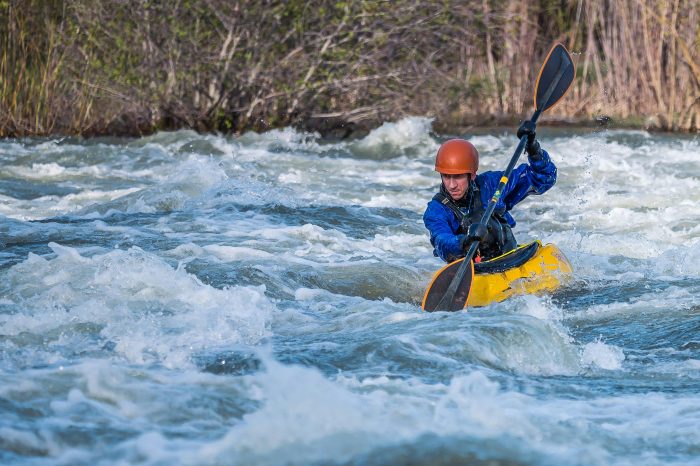
Lower back pain is one of the most common reasons people avoid kayaking or give it up after a few sessions. The seated paddling position, combined with the rotational demands of the forward stroke, can aggravate existing back problems if your setup and technique are not right.
The good news is that kayaking with a bad back is entirely possible with the right kayak, the right seat, and a few technique adjustments. Many physiotherapists actually recommend kayaking as a low-impact exercise for back pain sufferers because it builds core strength without the jarring impact of running or gym work.
This guide covers the main causes of back pain in kayaking and practical steps to address each one.
Why Does Kayaking Cause Back Pain?
Understanding why your back hurts is the first step to fixing it. The most common causes are:
Poor seat support
Most factory kayak seats provide minimal lumbar support. Sitting in a poorly supported seat for two or more hours causes the lower back to fatigue and compress, leading to pain during and after the paddle.
Incorrect paddling technique
Efficient kayaking uses torso rotation to power the forward stroke. Paddlers who rely on their arms instead of rotating their torso put excessive strain on the lower back muscles with every stroke. Over a two-hour paddle this adds up to thousands of repetitive strain movements.
Incorrect foot peg position
Foot pegs set too far away force the paddler to straighten their legs and flatten their lower back, removing the natural lumbar curve. Foot pegs set too close cause the knees to rise above the hips, which also flattens the lumbar spine and increases pressure on the lower back.
Paddle is too long or too short
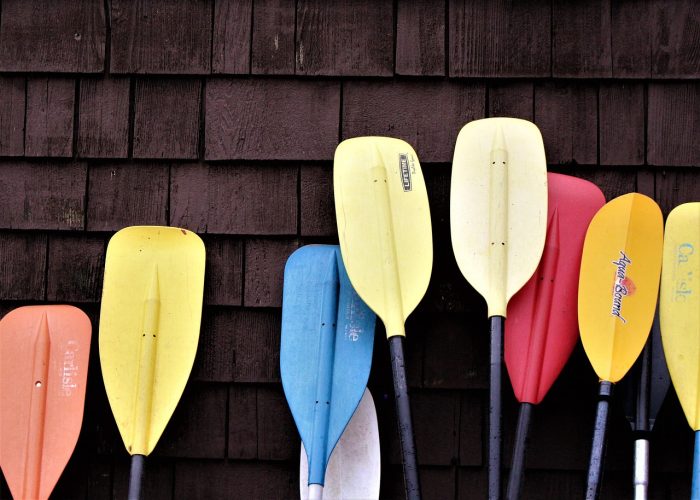
An incorrectly sized paddle encourages a hunched forward posture or an excessively wide stroke, both of which place additional strain on the lower back. The right paddle length allows a relaxed upright posture with the blade entering the water at the correct angle.
Sitting too long without a break
Extended sitting in any position compresses the lumbar discs over time. Most recreational paddlers do not take regular breaks, which allows back fatigue to build gradually until it becomes pain.
Choosing the Right Kayak for a Bad Back
Sit-on-top vs sit-inside
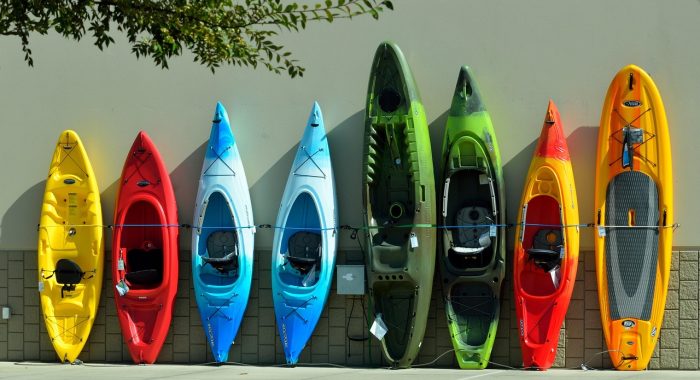
Sit-on-top kayaks are generally better for paddlers with back problems. The open deck allows more freedom of movement, makes it easier to shift position during the paddle, and allows you to stretch your legs more easily. Getting on and off a sit-on-top is also significantly easier than a sit-inside, which reduces the strain of entry and exit.
Sit-inside kayaks require more core engagement to maintain posture in an enclosed cockpit and can feel more restrictive for paddlers with limited mobility or flexibility.
Wider is more forgiving
A wider, more stable kayak allows you to shift your weight and adjust your position without risk of capsizing. For paddlers with back problems, the security of a stable platform reduces the unconscious muscle tension that comes from constantly correcting your balance.
Kayak length and weight
A heavier kayak requires more effort to carry, load onto a roof rack, and drag to the water. For paddlers with back problems, a lighter kayak significantly reduces the physical demands before and after paddling. Inflatable kayaks are particularly practical in this regard as they can be transported in a bag rather than requiring lifting onto a roof rack.
Read: How To Load a Kayak on a J Rack
The Most Important Upgrade: Your Kayak Seat
The single most impactful change for kayakers with back pain is upgrading to a better seat. Most factory seats are thin, flat, and provide minimal lumbar support. An aftermarket seat with proper back support transforms the paddling experience for back pain sufferers.
What to look for in a kayak seat for back pain:
- A high backrest of at least 45cm (18 inches) that supports the full lumbar region rather than just the lower few centimetres.
- Multiple adjustment points that allow you to fine-tune the seat angle and backrest position to suit your specific back condition.
- Thick, firm padding that does not compress flat after an hour of use. A low-profile back panel that does not push you forward in the seat.
Read: Best Kayak Seats and Cushions
Foot Peg Adjustment
Correct foot peg positioning is as important as seat quality for back health. Set your foot pegs so that your knees are slightly bent — roughly 20 to 30 degrees of flex. In this position your thighs should rest lightly against the inside of the hull or thigh braces, and your lower back should maintain its natural inward curve.
If your knees are straight or your heels are lifting off the pegs, move the pegs closer. If your knees are pressing hard against your chest, move them further away.
Re-check your foot peg position every time you paddle. It should be consistent and should not require any adjustment mid-paddle.
Read: Best Kayak Foot Pegs
Paddle Technique for Back Pain
Use your torso, not your arms
The forward stroke should be driven by rotating your torso from the hips, not by pulling with your arms. Each stroke begins with your torso wound toward the side of the entering blade and unwinds as the blade moves through the water. This distributes the work across your core muscles rather than concentrating it in your lower back.
A useful cue is to keep your elbows slightly bent throughout the stroke and focus on pushing with your top hand rather than pulling with your bottom hand. This naturally encourages torso rotation.
Shorten your stroke
A shorter, more vertical stroke requires less forward lean and reduces the rotational range required per stroke. For paddlers with back pain, a slightly shorter stroke that keeps the blade close to the hull reduces strain significantly without sacrificing much efficiency.
Choose a lighter paddle
A lighter paddle reduces fatigue across the entire upper body including the lower back muscles. Carbon fibre paddles are the lightest option. Fibreglass is significantly lighter than aluminium at a moderate price premium. For paddlers with back problems, upgrading to a lighter paddle is one of the most cost-effective changes available.
Use a low-angle paddling style
Low-angle paddling keeps the paddle shaft relatively horizontal, which reduces the amount of shoulder and back rotation required per stroke. It is less powerful than high-angle paddling but significantly more sustainable for paddlers with back issues over longer sessions.
Before and After Paddling
Warm up before launching
Five minutes of gentle stretching before launching makes a significant difference to back comfort during and after paddling. Focus on hip flexors, hamstrings, and thoracic rotation — all of which directly affect lower back comfort in the seated paddling position.
A simple routine: standing hip circles, gentle seated forward bends, and slow upper body rotations with arms extended are sufficient to prepare the back for paddling.
Take regular breaks
Stop and stretch every 30 to 45 minutes during longer paddles. Pull into shore or a sheltered area, stand up, and do a few gentle backward bends and side stretches. Even two minutes of movement per hour significantly reduces back fatigue accumulation.
Stretch after paddling
Post-paddle stretching helps prevent the stiffness that often develops in the hours after a session. Focus on the hip flexors (which shorten during prolonged sitting), the lower back extensors, and the thoracic spine.
Practical Gear Recommendations
Upgraded kayak seat
An aftermarket seat with a high backrest and proper lumbar support is the most important upgrade for back pain sufferers. The Skwoosh High Back Kayak Seat with gel padding is the most comfortable option on the market for long sessions.
Read: Best Kayak Seats
Lumbar support cushion
A small inflatable lumbar support cushion placed between your lower back and the seat backrest provides targeted support for the lumbar curve. These are inexpensive and widely available.
Lighter paddle
Upgrading from an aluminium to a fibreglass or carbon fibre paddle reduces fatigue significantly. The weight saving of 200 to 400 grams feels minor in your hand but makes a meaningful difference over a two-hour session.
Read: Why Are Kayak Paddles So Expensive?
Kayak cart
A kayak cart eliminates the need to carry the kayak to and from the water, which is one of the most back-stressful parts of the activity for many paddlers. Read: Best Kayak Carts and Trolleys for a full comparison of options across different terrain types.
Frequently Asked Question (FAQs)
Is kayaking good or bad for lower back pain?
Kayaking can be both good and bad for lower back pain depending on your setup and technique. With the right seat, correct foot peg position, and good paddling technique, kayaking is a low-impact activity that strengthens the core muscles supporting the lower back. With poor setup and technique, it can aggravate existing back problems. The key is addressing the setup factors before paddling regularly.
What type of kayak is best for someone with back problems?
A wide, stable sit-on-top kayak with an aftermarket high-back seat is the best choice for most paddlers with back problems. The open deck allows more freedom of movement, the stability reduces unconscious muscle tension, and the ease of entry and exit reduces strain before and after paddling.
How long should I paddle if I have a bad back?
Start with short sessions of 30 to 45 minutes and build up gradually as your core strength and paddling technique develop. Take a break every 30 minutes to stand and stretch during longer sessions. Most paddlers with back problems find they can build up to two to three hour sessions over several weeks with no issues once their setup is correct.
Can kayaking help strengthen the back?
Yes. Kayaking with correct technique builds the core muscles including the obliques, transverse abdominis, and erector spinae that support and protect the lower back. Many physiotherapists recommend paddling as a low-impact core strengthening activity for people with chronic lower back pain.
Should I see a physiotherapist before kayaking with back pain?
If you have a diagnosed back condition, it is worth discussing kayaking with your physiotherapist before starting. They can advise on whether any specific movements should be avoided and can help with a stretching and strengthening routine to support your paddling.
Final Thoughts
Kayaking with a bad back is manageable with the right setup and approach. The three most impactful changes are upgrading your seat, adjusting your foot pegs to the correct position, and focusing on torso rotation rather than arm-powered strokes.
Start with short sessions, take regular breaks, and build up gradually. Most paddlers with back problems find that kayaking becomes more comfortable over time as their core strength improves and their technique develops.
For more on kayaking comfort and safety, read our guide on kayaking with arthritis for related joint and posture considerations on the water.