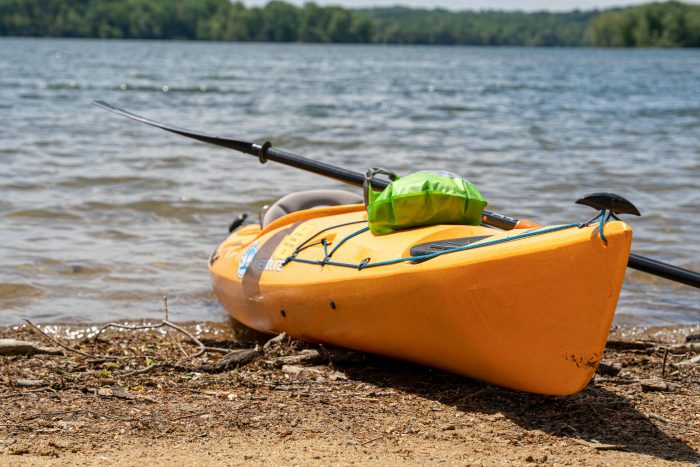
A bilge pump is a device used to remove excess water from the cockpit of a kayak. For sit-on-top kayaks, it is rarely necessary as the self-bailing scupper holes handle water drainage automatically.
The short answer is that you do not need a bilge pump for a sit-on-top kayak under normal conditions. However, a bilge pump is worth carrying if you paddle in rough water, have a known leak, or use a sit-inside kayak where water can accumulate in the enclosed cockpit
How To Kayak Without a Bilge Pump
Whether you use a sit-on-top kayak or a sit-inside kayak, the main risk you’ll face is capsizing or sinking if your kayak gets swamped with water. Because a bilge pump‘s purpose is pumping extra water out of the cockpit, it’s crucial to follow these tips to remove any excess water without using a pump.
Here’s what you can do when kayaking without a bilge pump – whether you’re using a sit-on-top or sit-inside kayak.
Getting Water Out of Your Sit-on-Top Kayak
Unlike sit-inside kayaks, sit-on-top models are outfitted with drainage holes called scupper holes. Their primary purpose is to drain any water that has washed into your kayak. The manufacturer of your kayak will typically include plugs that stop up the scupper holes.
If you’ve started taking on water, you should assess your scupper holes first. Be sure to remove the plugs and check that the holes aren’t clogged with debris since you started paddling.
A small amount of water is normal when using a sit-on-top kayak because of the open layout of the cockpit. However, too much water will cause you to capsize.
Once your scupper holes are draining properly, the water inside your kayak should decrease. If not, it may be time to head for the shore. In cases when your kayak has taken on so much water that it starts to sink, you may need to exit the kayak and swim to shore with the boat in tow.
Getting Water Out of Your Sit-Inside Kayak
Taking on too much water when using a sit-inside kayak is a little more dangerous. Because this style of kayak has an enclosed cockpit and no scupper holes, water can continue to fill the kayak until the boat becomes too heavy, resulting in you sinking.
If you don’t have a bilge pump, quick thinking will be the difference between sinking or capsizing and being able to carry on paddling.
Assess the situation and determine why you’re taking on water. Are you paddling through rough, white-water terrain? If not, is there a leak somewhere on your kayak? Is the combination of your weight and the weight of your gear too much?
Additionally, consider how much water is coming into the kayak and how fast it’s coming.
Most people have a water bottle or other drinking vessel onboard when they kayak. If you do, and if there isn’t too much water in the boat, you can use the bottle to scoop out the excess water.
Of course, this requires that you stop paddling, which is not always possible if you’re in rough waters. If you can paddle to shore or shallow water, you can tip the kayak over to drain the water and check for leaks or reassess the weight of your gear.
Regardless of which type of kayak you use, getting out of the boat in deep water and attempting to get back inside or on top without assistance is a bad idea. In most scenarios, paddling to shore, draining the water on land, then relaunching is the most efficient option.
If you paddle a sit-inside kayak in rough conditions, a manual bilge pump is a worthwhile piece of safety equipment to carry.
Read: Kayak Scupper Holes Explained
How To Avoid Flooding Your Kayak
Planning before you set out on a kayak trip can ensure you don’t sink while on the water. It will also help you have fun and get the most out of your kayaking experience.
Know How Much Weight Your Kayak Can Hold
While a kayak’s weight limit is often specific to the model and manufacturer, there are general limits to keep in mind.
A kayak’s weight capacity expresses the amount it can hold and still float, meaning it will be at the water line and difficult to paddle. Being below this limit will ensure that your kayak doesn’t take on water or sink.
This list includes the most common styles of kayaks and their respective weight limits:
- A single-seat sit-inside recreational kayak can hold up to 136kg (300lbs)
- Tandem sit-inside kayaks can hold up to 272kg (600lbs)
- Sea kayaks are designed to hold around 159kg (350lbs)
- Single-seat sit-on-top kayaks typically hold up to 181kg (400lbs)
Read: Kayak Weight Limits Explained
Inspect Your Kayak Before You Start Paddling
For sit-on-top kayakers, inspecting your kayak before launching into the water should involve checking your scupper holes and drain plugs. For any kayak, including sit-inside models, testing the hull for leaks will also help you avoid taking on water. Even a small puncture can be detrimental in deep or rough water.
Be Careful About What You Bring On Board Your Kayak
As stated above, kayaks have specific weight capacities. Once you know the weight limit of your boat, you should subtract your body weight.
Kayakers should strive to have about 30 percent less weight on board than the kayak’s limit. As an example, a kayaker who weighs 200 pounds (90.7 kg) in a vessel with a 300-pound (136.1 kg) weight limit should only bring ten pounds (4.5 kg) of gear with them at the very most.
Final Thoughts
For sit-on-top kayakers paddling in calm conditions, a bilge pump is not essential. Your scupper holes do the job automatically. The more important precautions are staying within your kayak’s weight limit, checking your scupper holes before launching, and knowing when to head for shore if water is accumulating faster than it can drain.
For sit-inside kayakers, a bilge pump is a sensible piece of safety equipment, particularly in rough or exposed conditions where water can enter the enclosed cockpit faster than you can manage it manually.