Kayaking with children is one of the best ways to introduce kids to the outdoors and time on the water. With the right preparation, the right kayak, and age-appropriate expectations, it is a safe and enjoyable activity for the whole family.
This guide covers the recommended ages for kayaking with children, how to choose the right kayak, what safety gear you need, and practical tips for making the first few trips enjoyable for everyone.
What Age Is Suitable for Kayaking With Kids?
There is no single correct answer, but the following provides a practical framework:
Under 12 months: Infants should not be taken on a kayak. They cannot wear a properly fitted PFD, cannot support their own head reliably, and cannot respond to the physical demands of being on the water.
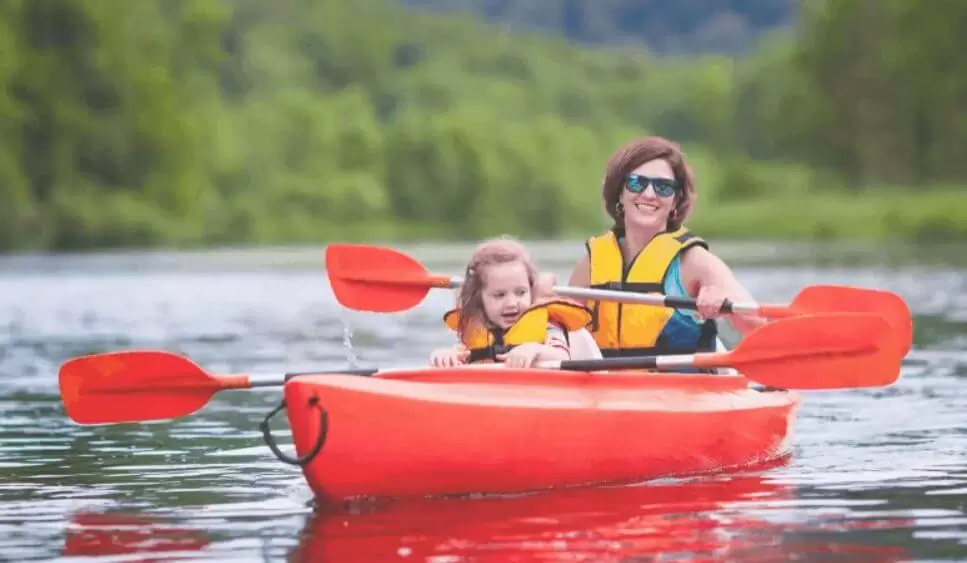
1 to 3 years: Toddlers can come along as passengers in a tandem kayak, seated between the paddler’s legs or in the bow cockpit while a parent paddles from the stern. Keep sessions very short, stick to calm flat water, and ensure the child wears a properly fitted infant or toddler PFD.
4 to 7 years: Children in this age range can sit as passengers in a tandem kayak and may begin using a small paddle to help. They should be able to sit still for the duration of the trip and wear a correctly fitted child PFD at all times.
8 years and over: Children old enough to follow instructions consistently and sit stably can begin paddling in the bow of a tandem kayak or, if they are confident and experienced, in their own small solo kayak on calm water under close supervision.
Where To Kayak With Kids
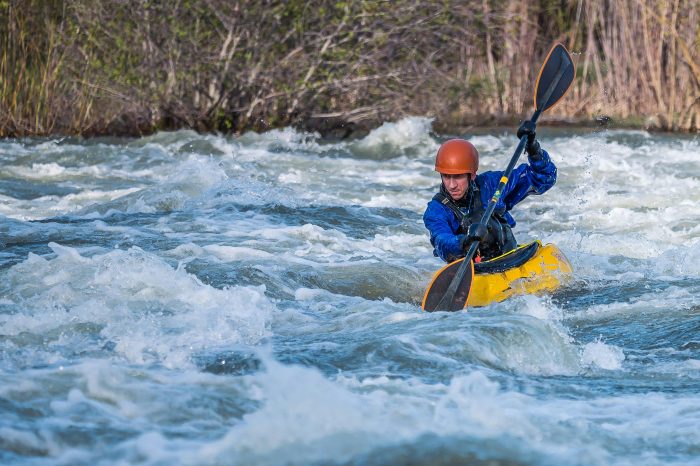
Always choose calm, flat water for kayaking with children. Protected bays, lakes, slow rivers, and harbour inlets are all good choices. Avoid open coastal water, tidal rivers, moving water above Class I, and any location where conditions can change rapidly.
As a general rule, the younger the child, the more sheltered the location should be. Start on a small calm lake close to shore and build up to more exposed locations as the child gains experience and confidence.
Read the weather forecast before every trip and be prepared to cancel if conditions are unfavourable. Weather on open water can change quickly, and paddling back against wind with a tired child on board is genuinely difficult.
Read: Is Kayaking Dangerous?
How Long Should the Trip Be?
Keep the first trips short. For toddlers and young children, 30 to 45 minutes on the water is plenty. For children aged 6 and over, one to two hours is a reasonable target for an enjoyable outing without exhaustion setting in.
Build trip length gradually as the child becomes more comfortable and enthusiastic. Pay attention to signs of tiredness, boredom, or discomfort and head back to shore before things deteriorate. A short trip that ends on a positive note is far more likely to lead to a child who wants to come back than a long trip that ends in tears.
Plan circular routes or out-and-back routes that keep you close to your launch point throughout the trip.
Safety Tips for Kayaking With Kids
Gain some experience first
Parents who are comfortable and confident on the water will have a much better experience kayaking with children than those who are still learning themselves. If you are new to kayaking, take a few sessions on your own or with other adults before bringing children along.
Learn basic water safety
Make sure your child is comfortable in the water before taking them kayaking. Swimming lessons are not strictly required, but a child who is comfortable in water is significantly less likely to panic if they end up in the water unexpectedly. Teach children what to do if they capsize: stay calm, float on their back, and wait for help.
Set clear rules
Before getting on the water, explain the rules clearly. Children should stay seated at all times, keep both hands on the paddle or the sides of the kayak when not paddling, not lean over the sides, and alert the adult immediately if they feel unwell or uncomfortable. Keep the rules simple and consistent.
Check the weather
Check the forecast before every trip. Avoid paddling in strong winds, heavy rain, or thunderstorms. Be aware that conditions on open water can change more quickly than conditions on land.
Always wear PFDs
Every person on the kayak, including adults, must wear a properly fitted PFD at all times on the water. For children, choose a PFD rated for their weight and check the fit carefully before launching. A PFD that is too large will not keep a child’s head above water in an emergency.
PFDs are generally sized by weight:
- Infants: up to 15kg (33lbs)
- Children: 15kg to 25kg (33 to 55lbs)
- Youth: 25kg to 40kg (55 to 88lbs)
Read: Best Life Jackets for Kayak Fishing
Choosing the Right Kayak for Kids
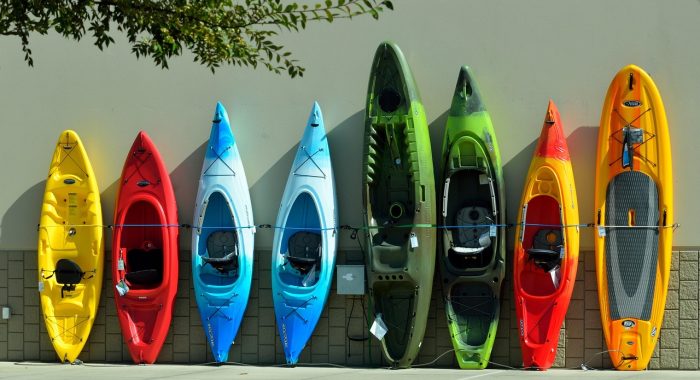
A tandem sit-on-top kayak is the best choice for paddling with young children. The open deck gives a child more room to move and makes it easier for them to get on and off. The wide beam of most sit-on-top tandems provides good stability, which is important when paddling with an unpredictable passenger.
For children aged 8 and over who are ready to paddle solo, look for a short recreational sit-on-top or sit-inside kayak in the 2.4m to 3m (8ft to 10ft) range. These are light, stable, and easy to manage for a young paddler.
Inflatable kayaks are a practical option for families as they are wide, stable, easy to transport, and can be stored in a small space. Most inflatable tandems have enough deck space for a child to sit comfortably while a parent paddles.
Read: Best Inflatable Kayaks Under USD$500
What To Bring When Kayaking With Kids
PFDs for everyone – Every person on the water needs a properly fitted PFD. Do not compromise on this.
Plenty of water – Children dehydrate faster than adults. Bring more water than you think you will need and encourage children to drink regularly throughout the trip.
Snacks – Pack easy snacks like fruit, crackers, and muesli bars to keep energy levels up. Store food in a dry bag or the kayak’s storage compartment.
Sun protection – Apply sunscreen before launching and bring a hat and sun shirt for each child. Sun exposure on open water is intense and children burn quickly.
First aid kit – Carry a basic first aid kit including plasters, antiseptic, and any personal medication your child requires.
Dry bag – Keep spare clothing, your phone, and any valuables in a waterproof dry bag.
Tow line or float bag – If paddling with an older child in their own kayak, carry a tow line so you can assist them if they become tired or conditions change.
Final Thoughts
Kayaking with children is genuinely rewarding when it is done with the right preparation. Start on calm water, keep trips short, ensure everyone wears a correctly fitted PFD, and set clear expectations before getting on the water.
The most important factor is keeping the experience positive for the child. A short, enjoyable trip builds confidence and enthusiasm for future sessions. Take it gradually and let the child set the pace.
For more on water safety and choosing the right gear, read our guides on is kayaking dangerous and best life jackets for kayak fishing.