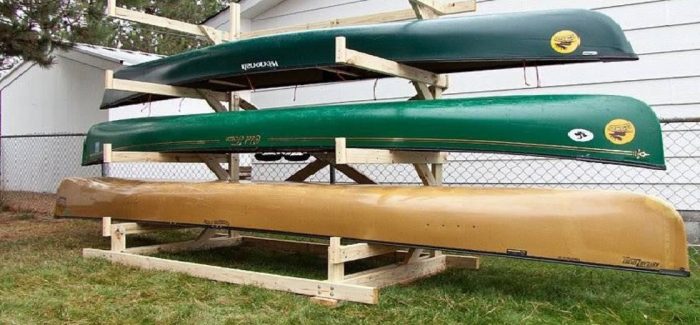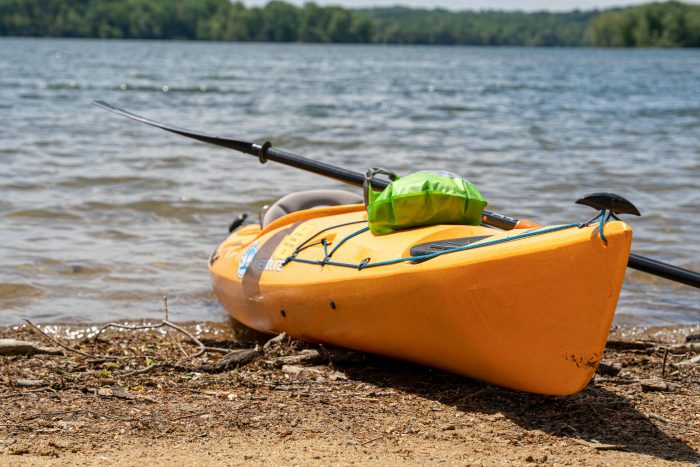
Proper kayak storage is one of the most important things you can do to extend the life of your kayak. Storing a kayak incorrectly leads to hull warping, UV damage, moisture damage, and unnecessary wear that shortens its lifespan significantly.
This guide covers the best ways to store a kayak both indoors and outdoors, how to hang a kayak to save space, and the steps to prepare your kayak for storage between sessions.
Where To Store A Kayak
The best place to store a kayak is indoors, away from direct sunlight, extreme temperatures, and moisture. A garage, basement, or shed are all good options. Indoor storage protects the hull from UV damage and keeps the kayak secure from theft.
If indoor storage is not possible, outdoor storage can work with the right precautions. Choose a shaded spot, use a UV-resistant waterproof cover, and keep the kayak off the ground using a storage rack or wall mount.
How To Store A Kayak Indoors
Indoor storage is the preferred option for most kayak owners. A garage works well as long as you keep the kayak away from heat sources like furnaces and water heaters, which can cause the hull to warp over time.
Key rules for indoor storage
Keep it off the ground – Never store a kayak directly on the hull for extended periods. The weight of the kayak on a hard surface causes hull deformation over time, particularly with rotomolded polyethylene kayaks.
Store it on its side or suspended – The best positions are hull-side up on a padded rack, on its side supported along the length, or suspended from the ceiling using a pulley hoist system. All of these distribute the weight evenly without creating pressure points.
Use padding – Any contact point between the kayak and a rack or bracket should be padded. Wide nylon straps and padded cradles that match the hull’s curve provide the best support.
Avoid direct sunlight – Even indoors, avoid storing the kayak near windows where UV exposure can fade and weaken the hull material over time.
How To Store a Kayak Outside
Outdoor storage is a viable option if you take the right precautions. The main risks are UV damage, moisture, extreme temperature changes, and theft.
Use a kayak cover. A UV-resistant waterproof cover is essential for outdoor storage. It protects against sun damage, rain, and debris. A good cover will significantly extend the life of a kayak stored outdoors.
Keep it off the ground. Use a freestanding storage rack or wall mount to keep the kayak elevated. Direct ground contact leads to moisture damage and pest infestation.
Choose a shaded spot. Direct sunlight is the biggest enemy of outdoor kayak storage. A shaded area under a deck, pergola, or overhang is ideal.
Secure it against theft. If storing outdoors, always lock the kayak to a fixed structure with a cable lock or chain.
Storing A Kayak In Winter

Winter storage requires extra care, particularly in climates where temperatures drop below freezing.
Indoor storage is strongly recommended during winter. Freeze-thaw cycles can cause hull damage, particularly on composite kayaks. If outdoor storage is the only option, use a heavy-duty waterproof cover and keep the kayak elevated off the ground to prevent moisture buildup underneath.
Before putting your kayak away for the season, rinse it thoroughly with fresh water, allow it to dry completely, apply a UV protectant, and check for any cracks or damage that should be repaired before the next season.
How To Hang A Kayak
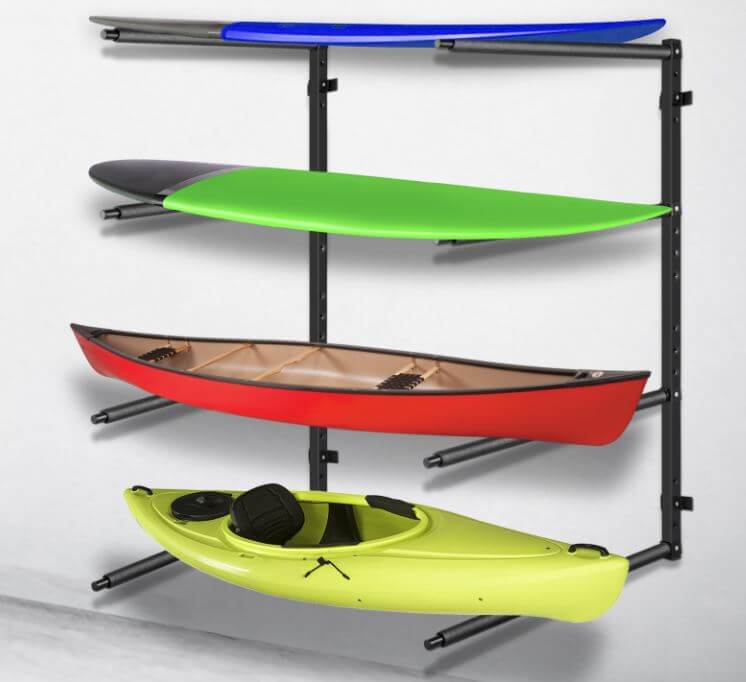
Hanging a kayak on a wall mount or ceiling hoist is one of the most space-efficient storage solutions, particularly for smaller homes and garages.
Wall mounts use padded brackets attached to the wall. The kayak sits on the brackets either hull-side up or on its side. Wall mounts are easy to install and allow quick access to the kayak. Make sure the brackets are mounted into studs or solid masonry and are rated for the weight of your kayak.
Ceiling hoist systems use a pulley mechanism to raise and lower the kayak from the ceiling. They free up wall and floor space entirely, making them ideal for garages with limited room. Look for a system rated for at least 45kg (100lbs).
Never hang a kayak from its grab loops as this puts excessive stress on the hull at the attachment points and can cause damage over time.
How To Prepare Your Kayak For Storage
Follow these steps each time you put your kayak away for an extended period.
Step 1 — Remove all gear
Take out seats, foot pegs, dry bags, and any other removable accessories. Store them separately in a dry location. Rinse and dry all accessories before storing to prevent mold and corrosion.
Step 2 — Clean the kayak
Wash the hull and cockpit with mild soap and water to remove salt, dirt, and debris. Rinse thoroughly and dry completely before storing. Any moisture left inside hatches or the cockpit can cause mold and mildew over time.
Step 3 — Apply UV protectant
Apply a coat of UV protectant spray or kayak wax to the hull. This protects against sun damage and keeps the hull looking good for longer.
Step 4 — Fit a cockpit cover
Fit a cockpit cover to keep insects, rodents, and debris out of the cockpit while stored. This is particularly important for outdoor storage. Read: Best Cockpit Covers.
Step 5 — Lock it up
If storing outdoors or in a shared space, secure the kayak with a cable lock attached to a fixed structure. Read: How To Lock a Kayak.
Final Thoughts
The most important rules for kayak storage are to keep it off the ground, protect it from UV exposure, store it on its side or suspended rather than flat on the hull, and keep it locked when not in use. Follow those principles and your kayak will last for decades.
For more on kayak maintenance, read our guides on how to keep your kayak in good shape and can you store a kayak on sawhorses.