A kayak cart makes it significantly easier to move a kayak between your vehicle and the water, particularly over long distances or rough terrain. If your kayak keeps falling off the cart, the cause is almost always one of three things: the straps are not tight enough, the kayak is not sitting correctly on the support pads, or the kayak is overloaded with gear.
Here are the three most common causes and how to fix each one.
1. The Straps Are Not Tight Enough
Loose straps are the most common reason a kayak falls off a cart. If the kayak can move sideways or forward on the cart, even slightly, it will eventually tip off on uneven ground or when changing direction.
Several things can cause loose straps:
No straps used at all — it sounds obvious, but kayaks are sometimes placed on a cart and moved a short distance without being strapped down. Even a short distance over rough ground is enough for an unstrapped kayak to fall.
Wrong type of strap — old ropes or household straps that are too flexible or too short cannot be tensioned tightly enough to hold a kayak securely. Use the straps that came with the cart or dedicated cam buckle tie-down straps.
Wet straps — wet nylon webbing stretches and loses tension more quickly than dry straps. If your straps got wet before loading the kayak, they may loosen during transport.
How To Fix
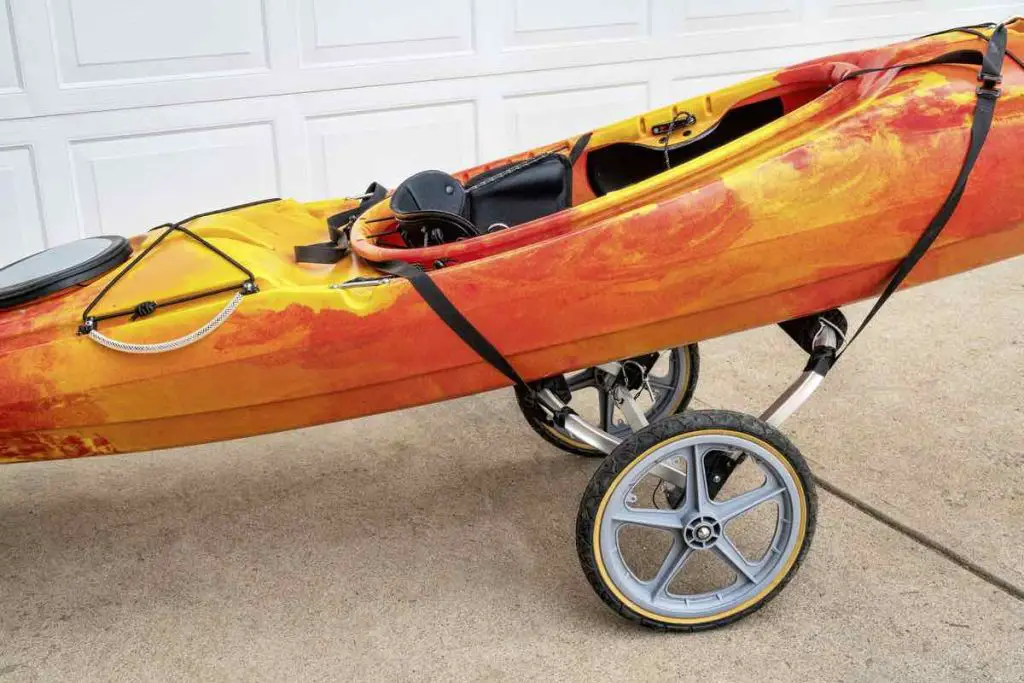
Use the straps supplied with your cart or replace them with quality cam buckle straps. Thread the strap through the cart frame and over the kayak hull, pull firmly until there is no slack, and check the tension again after the first few metres of movement. Re-tighten as needed.
2. The Kayak Is Not Sitting on the Support Pads
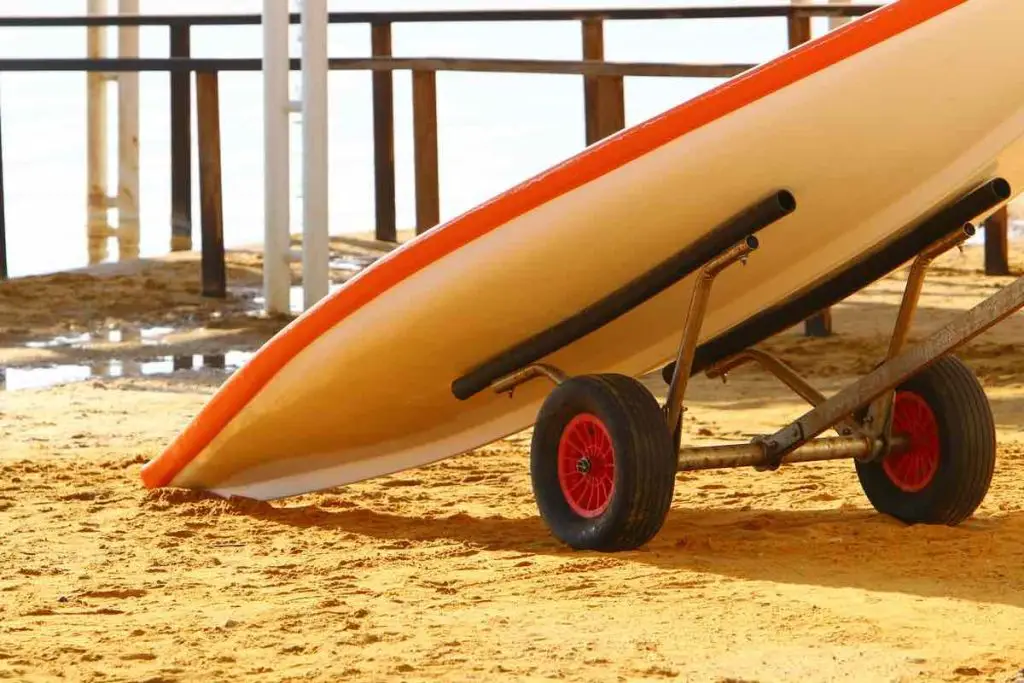
Kayak carts have two padded support arms designed to cradle the hull at specific contact points. If the kayak is not centred correctly on these pads, it will rock and shift during transport rather than sitting stably.
This is particularly common with kayaks that have an unusual hull shape or when the cart pads are positioned too close together or too far apart for the hull width.
How To Fix
Before strapping the kayak down, check that the hull is resting evenly on both support pads with the kayak centred lengthways on the cart. The cart should sit roughly one third of the kayak’s length from the stern for the best balance.
If the pads are not wide enough for your hull, add foam pipe insulation or pool noodle sections to the support arms to widen the contact area and prevent the hull from rocking.
3. The Kayak is Overloaded
A heavily loaded kayak is harder to balance on a cart and harder to keep strapped securely. Bulky items like coolers, backpacks, and dry bags positioned near the sides of the hull can prevent the straps from sitting flat against the hull, reducing their holding strength.
Heavy loads also raise the centre of gravity, making the kayak more likely to tip when moving over uneven surfaces or making turns.
How To Fix
Remove bulky gear from the kayak before loading it onto the cart where possible. If you need to transport gear in the kayak, keep items low and centred in the hull rather than near the sides. Make sure nothing is sitting above the rim of the cockpit where it could catch the straps or shift the balance.
Read: Kayak Weight Limits
Read: Why Is Your Kayak Unstable?
Final Thoughts
Most kayak cart problems come down to strapping technique and positioning. Take a moment before moving to check that the kayak is centred on the support pads, the straps are threaded correctly through the frame, and the tension is firm enough that the kayak cannot rock or shift.
For more on transporting and storing your kayak, read our guides on how to store a kayak and kayak weight limits.