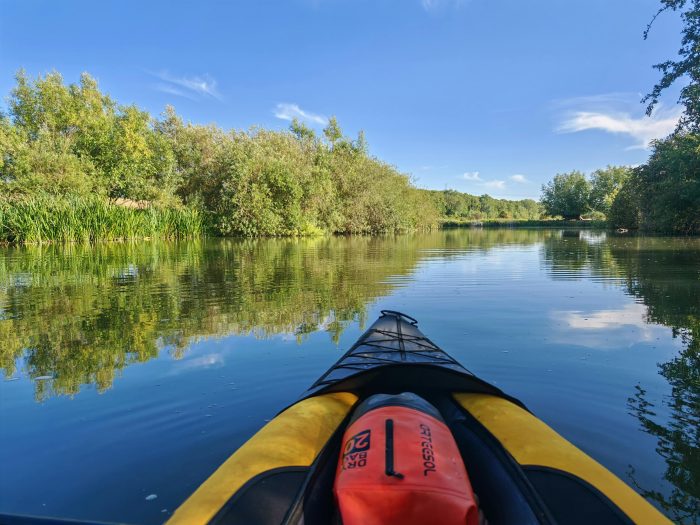
A kayak helmet is essential safety equipment for whitewater paddling. In fast-moving water, rocks, hydraulics, and unexpected capsizes present a genuine risk of head injury. A properly fitted helmet significantly reduces that risk.
Not all kayakers need a helmet — for flat water recreational paddling, a helmet is generally not necessary. But for any paddling in moving water, rapids, or surf, wearing a helmet is strongly recommended.
We’ve reviewed 6 of the best kayak helmets covering full cut, half cut, and full face options across a range of budgets.
1. WRSI Trident – Best Overall
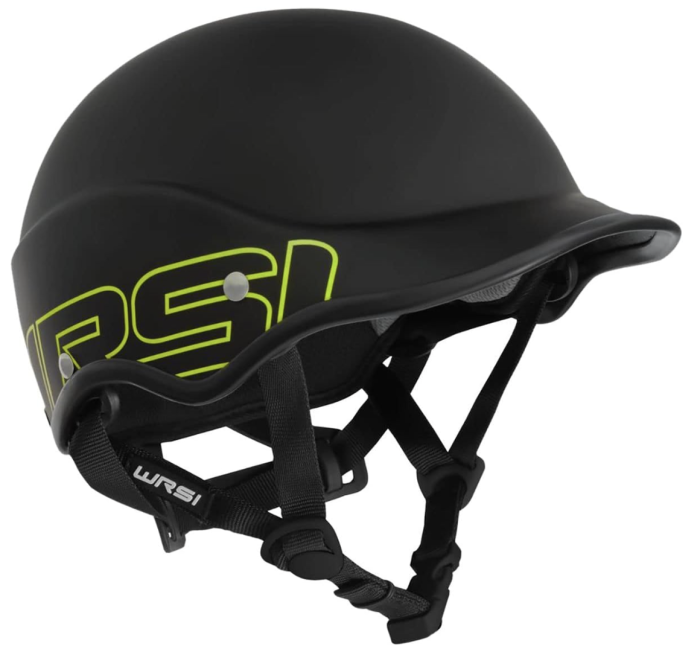
The WRSI Trident is our top pick for the best overall kayak helmet. The carbon composite shell is exceptionally lightweight at around 650g (1.45lbs), making it one of the lightest full-cut helmets available. Despite its low weight, the composite construction offers excellent impact protection and durability.
The polyurethane subshell and soft EVA lining provide a comfortable fit, and the adjustable chin strap allows a precise and secure fit across different head shapes. Available in multiple sizes. A premium option for serious whitewater paddlers who want the best protection without the weight.
What We Liked
- Carbon composite construction
- Exceptional lightweight design
- Adjustable chin strap
- Full cut coverage including ears and temples
What We Didn’t Like
- Premium price point
- Some users report sizing runs small
2. NRS HAVOC – Best Budget Option
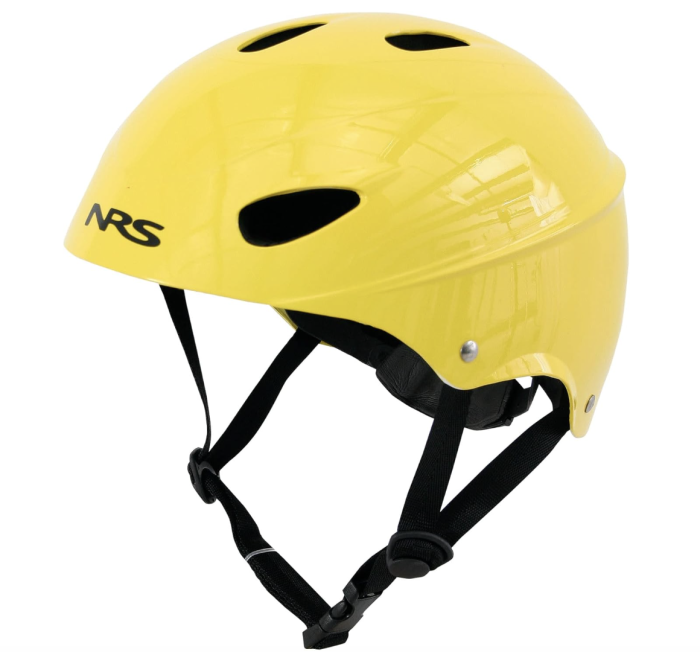
The NRS Havoc is the best budget option on this list. The ABS plastic outer shell is durable and impact resistant, and the thick plush internal padding provides solid protection at a fraction of the price of premium composite helmets.
The fully adjustable straps mean a single helmet can be adjusted to fit different head sizes, making it a practical choice for paddle clubs and beginners. Available in four colours and multiple sizes. At around 450g (1lb) it is one of the lightest helmets on this list.
What We Liked
- Most affordable option
- Adjustable straps for versatile fit
- Thick internal padding
- Lightweight at 450g
What We Didn’t Like
- ABS plastic less durable than composite options
- Improper sizing can cause discomfort
3. NRS CHAOS – Best Full Cut
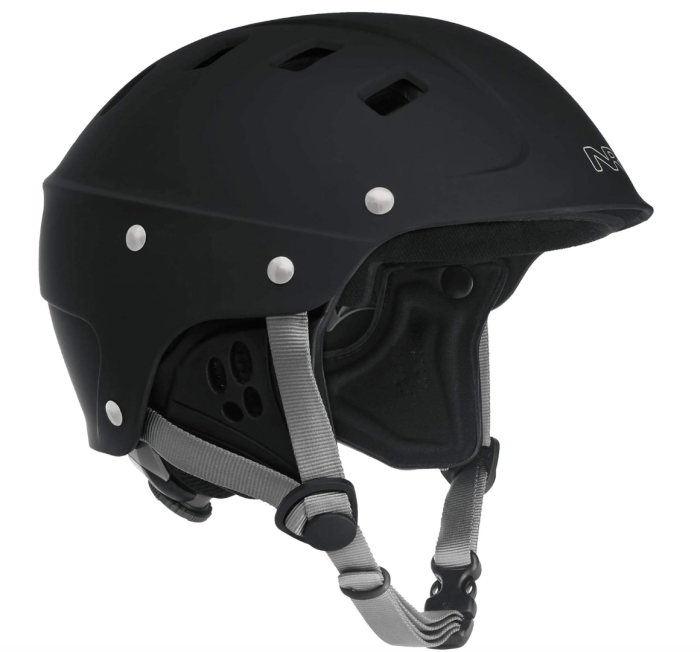
The NRS Chaos is the best dedicated full cut helmet on this list. The ABS plastic shell provides solid protection, and eight ventilation vents are positioned to maximise airflow and keep head temperature down during active paddling.
The full cut design extends lower at the back and over the ears, providing more coverage than a half cut helmet. This makes it particularly well suited to whitewater paddling where ear and temple protection matters. The adjustable chin strap gives a secure fit, and the helmet is available in five colours and multiple sizes.
What We Liked
- Eight ventilation vents
- Full cut ear and temple protection
- Adjustable chin strap
- Available in five colours
What We Didn’t Like
- Heavier than composite alternatives at 880g (1.94lbs)
4. WRSI MOMENT – Best Full Face
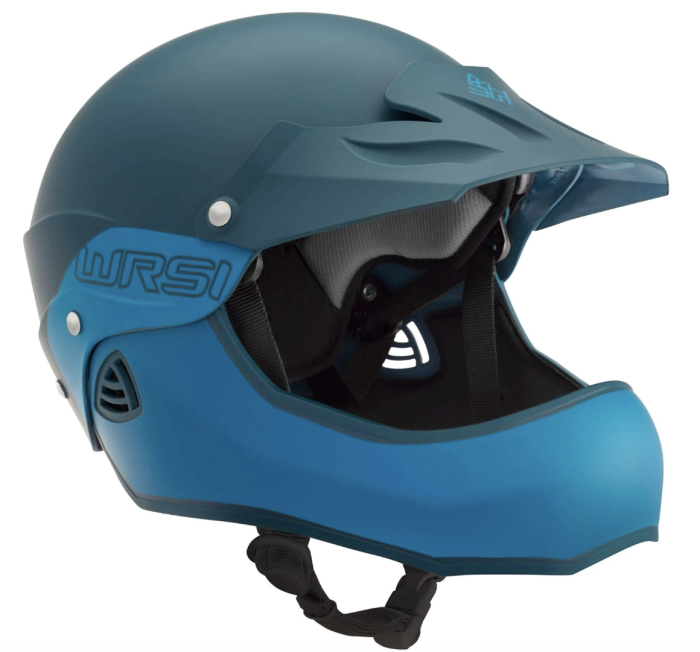
The WRSI Moment is the best full face kayak helmet on this list. It provides complete head protection including the cheeks, chin, and jaw — the most comprehensive coverage available for high-risk whitewater conditions.
The ABS plastic outer shell with polyurethane subshell provides excellent impact absorption, and two ventilation vents positioned near the ears allow airflow without compromising protection. The adjustable chin strap gives a secure fit across different head sizes. Available in three colours and two sizes. Recommended for advanced whitewater, creeking, and any paddling where full face impact protection is a priority.
What We Liked
- Full face protection including cheeks and chin
- ABS and polyurethane construction
- Adjustable chin strap
- Good ventilation for a full face design
What We Didn’t Like
- Higher price point
- Can feel warm in hot conditions
5. Tontron Adult Whitewater Helmet – Best Mid-Range
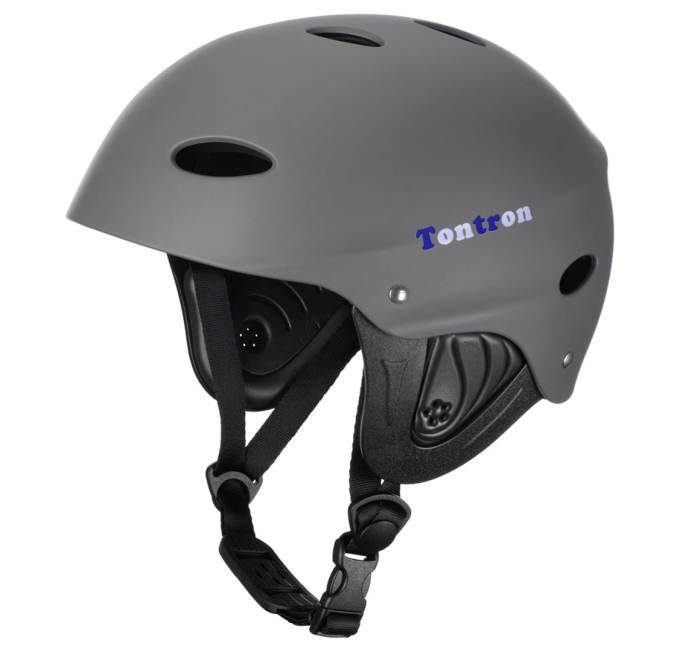
The Tontron Adult Whitewater Helmet is the best mid-range option on this list and the most accessible for Australian buyers with fast local delivery. The ABS and carbon fibre outer shell is paired with EVA foam lining that provides solid impact protection, and the removable padding allows washing and size adjustment.
Eleven ventilation vents provide excellent airflow for a full cut helmet, making it comfortable during extended sessions. The magnetic buckle closure is a practical feature that allows easy one-handed operation. Available in multiple colours and sizes.
What We Liked
- ABS and carbon fibre construction
- Removable washable padding
- Eleven ventilation vents
- Magnetic buckle closure
What We Didn’t Like
- Sizing can run large
6. Triple Eight Sweatsaver Halo Water Helmet – Best for Beginners
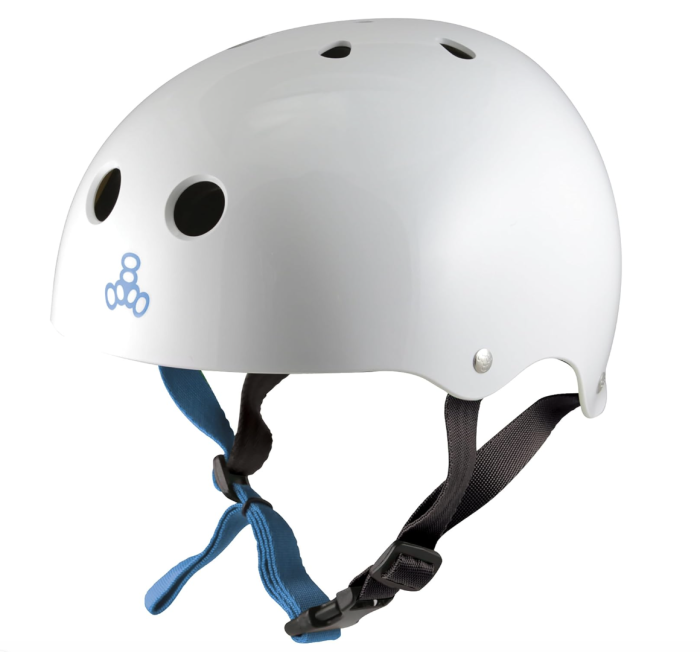
The Triple Eight Sweatsaver Halo is a well-reviewed water sports helmet ideal for beginners and recreational paddlers who want reliable protection without the complexity of a dedicated whitewater helmet. The hard ABS shell provides solid impact resistance, and the Sweatsaver liner wicks moisture and keeps the interior fresh.
Available with next-day delivery from Australian stock, the Halo is one of the most accessible options on this list. It is best suited to moderate conditions rather than advanced whitewater, but for introductory paddling, wave play, and recreational rivers it is a practical and affordable choice.
What We Liked
- Sweatsaver moisture-wicking liner
- Hard ABS shell
- Good value for beginners
What We Didn’t Like
- Not designed for advanced whitewater
- Less coverage than dedicated kayak helmets
Why Wear a Kayak Helmet?
In moving water, the risk of hitting your head on a rock, the riverbed, or your own kayak during a capsize is significant. A helmet absorbs and distributes the impact of a blow to the head, reducing the risk of serious injury or unconsciousness in the water.
For flatwater recreational paddling on calm lakes and slow rivers, a helmet is generally not necessary. For any paddling in rapids, surf, or moving water above Class I, wearing a helmet is strongly recommended regardless of your experience level.
How To Fit a Kayak Helmet
A correctly fitted kayak helmet should sit level on your head with the front edge two finger-widths above your eyebrows. It should feel snug without being uncomfortable, and should not rock forward, backward, or side to side when you shake your head.
The chin strap should be tight enough that you can fit two fingers underneath it comfortably. Any looser and the helmet may come off during a capsize. Adjust the strap before every session.
If you are buying online, measure the circumference of your head at the widest point and check the manufacturer’s size guide before purchasing.
Types of Kayak Helmets
Full cut helmets extend lower at the back and cover the ears. They provide the most protection of the three styles and are recommended for whitewater paddling. The tradeoff is slightly reduced hearing and a warmer fit.
Half cut helmets sit above the ears and are lighter and cooler than full cut models. They are suitable for calmer conditions and beginners but do not provide ear protection.
Full face helmets cover the entire head including the chin, cheeks, and jaw. They provide the highest level of protection and are recommended for advanced whitewater, creeking, and high-risk conditions. They are heavier and warmer than open face alternatives.
What To Look For in a Kayak Helmet
Type
Choose your helmet type based on the conditions you paddle in. Full cut for general whitewater, half cut for calmer water and beginners, full face for advanced whitewater and creeking.
Construction material
Premium helmets use carbon composite or fibreglass shells, which are lighter and stiffer than ABS plastic. Mid-range helmets use ABS plastic, which is heavier but still provides solid protection. Budget helmets may use polycarbonate or mixed plastics.
Fit and sizing
Measure your head circumference before buying. Most helmets come in small, medium, and large, with adjustable chin straps for fine-tuning. A helmet that does not fit correctly provides significantly less protection than one that fits well.
Ventilation
More vents mean better airflow and cooler wear during active paddling. Look for helmets with at least six to eight vents for comfortable whitewater use. Full face helmets have fewer vents by necessity.
Retention system
Look for an adjustable chin strap with padding at the contact points. A two-point adjustment system gives the most precise fit. The buckle should be easy to operate with wet gloves.
Frequently Asked Questions (FAQs)
Do I need a helmet for kayaking?
For flatwater recreational paddling, a helmet is generally not required. For any paddling in moving water, rapids, or surf, a helmet is strongly recommended. Even a minor capsize in shallow rocky water can result in a serious head injury without a helmet.
What type of kayak helmet should I use for whitewater?
A full cut helmet is the standard choice for whitewater kayaking. It covers the ears and temples, providing more protection than a half cut helmet. For advanced whitewater and creeking, a full face helmet provides the highest level of protection.
Can I use a bicycle helmet for kayaking?
A bicycle helmet is not suitable for kayaking. Bicycle helmets are not designed to withstand submersion or repeated impact from rocks and moving water. They also lack the ventilation drainage required for water sports use. A dedicated kayak helmet is always the safer choice.
How should a kayak helmet fit?
The helmet should sit level on your head two finger-widths above your eyebrows. It should feel snug but not painful, and should not move when you shake your head. The chin strap should be tight enough to fit two fingers underneath comfortably.
Final Thoughts
For most whitewater paddlers, the WRSI Trident is the best all-round choice — lightweight, well-constructed, and trusted by experienced paddlers. For budget buyers, the NRS Havoc provides solid protection at an accessible price.
If you paddle in high-risk conditions including advanced whitewater or creeking, the WRSI Moment full face helmet provides the most comprehensive protection available at this price point.
For more on kayaking safety, read our guides on is kayaking dangerous and how to kayak at night.